

Episode IV: Andor, When Subtext Becomes Text
For decades, the Empire’s totalitarian references functioned as atmosphere. Andor (2022) changed that entirely. Showrunner Tony Gilroy stated in interviews that he designed the series to make the political machinery of fascism visible and legible. The ISB (Imperial Security Bureau) boardroom scenes were modeled explicitly on the structure and culture of the Gestapo. The architecture of Coruscant’s Imperial facilities echoed Speer’s monumentalism with greater precision than any previous Star Wars property.
Most strikingly, the graduation ceremony on Scarif reproduced the spatial composition of Nazi rallies almost exactly. The massed officers in identical uniforms, the elevated podium, the speaker addressing a faceless collective: Gilroy cited the Nuremberg rallies as a direct visual reference for this scene.
Moreover, he framed the ISB sequences through Hannah Arendt’s concept of the “banality of evil,” the idea that atrocity operates not through monsters but through bureaucrats. The fact that a Disney+ production reached for Arendt as its guiding framework is, in itself, a remarkable cultural moment. It signals a shift in how the franchise understands its own visual history, and how seriously it takes the responsibility that comes with it.
Episode V: The Danger of Beautiful Fascism
In 1975, Susan Sontag published her landmark essay “Fascinating Fascism.” She argued that the aesthetics of fascism were not simply propaganda tools. They were genuinely beautiful objects that carried seductive power. Thus, beauty, Sontag wrote, did not neutralize ideology, but amplified it.
This argument applies directly to Star Wars. The Empire looks extraordinary, Star Destroyers are elegant machines and the Imperial officers wear beautifully tailored uniforms. The Death Star, for all its horror, has the geometric perfection of a Minimalist sculpture, while the TIE fighter’s circular cockpit and twin hexagonal panels produce a silhouette of genuine aesthetic force.
Yet the reproduction of totalitarian aesthetics in Star Wars does not constitute an ode to fascism. It constitutes a map of it. Lucas did not borrow these visual languages to celebrate them. He borrowed them to make the enemy unmistakable. The Empire looks like history’s worst regimes because the audience needs to recognize it as such. A villain designed without reference to real atrocity risks becoming abstract, making them easy to ignore. On the contrary, the Galactic Empire, with its Nuremberg formations and Speer-scale architecture, is not abstract at all.
Star Wars also insists, at every turn, that this evil is defeated. The Battle of Yavin destroys the Death Star. whereas the Battle of Endor dismantles the Emperor. The good wins, not through spectacle, but through individual courage, solidarity, and moral clarity. These are precisely the values that totalitarian aesthetics, with their erasure of the individual into the collective, exist to destroy. The franchise borrows the aesthetic precisely to invert its ideology.
Episode VI: Art History as a Warning System
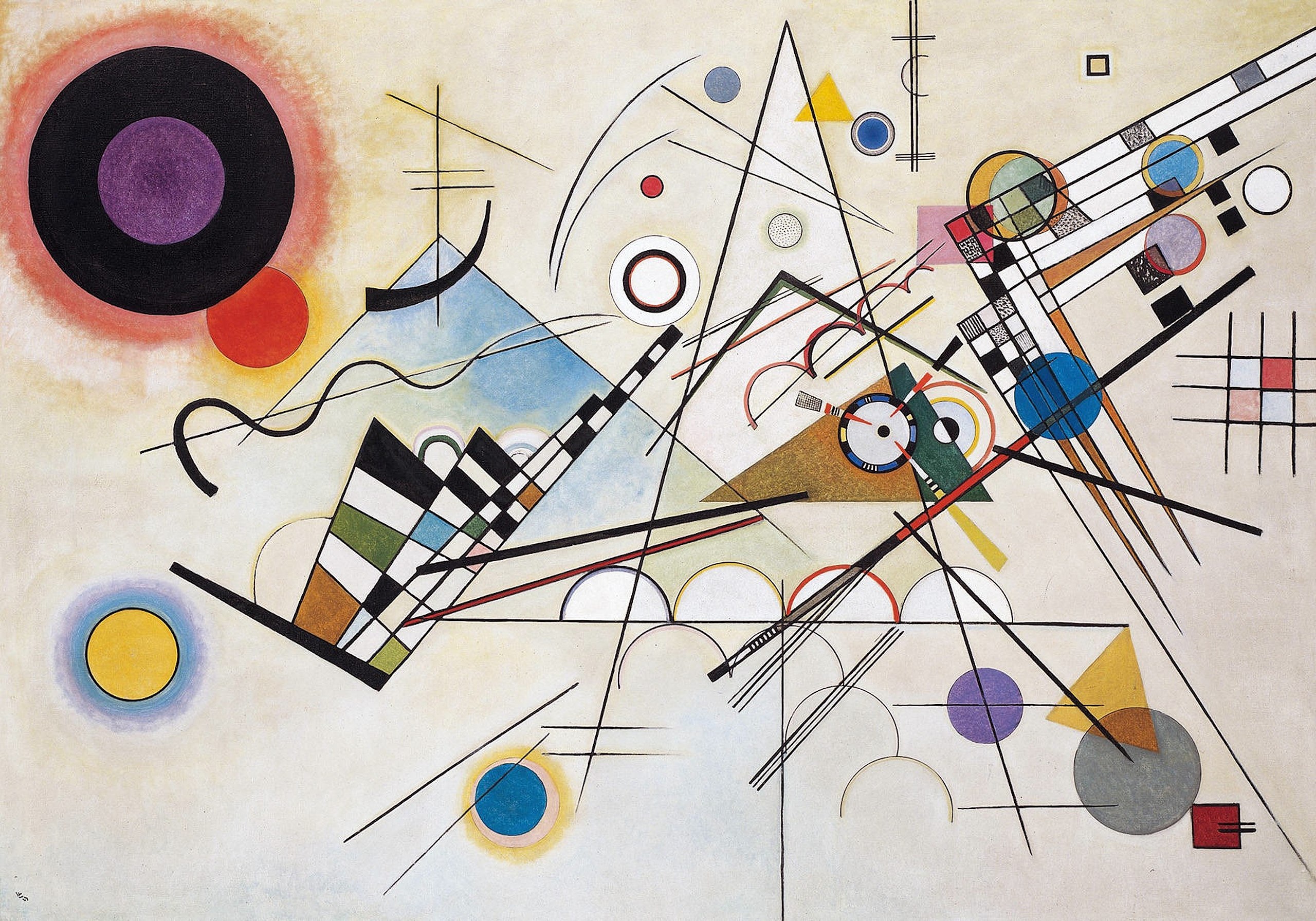
The visual language of authoritarianism is learnable. Constructivist diagonals, Socialist Realist heroism, Speerian scale, Riefenstahl’s angles: these are not historical curiosities. They are a recurring vocabulary that power reaches for whenever it needs to overwhelm individual judgment through spectacle.
George Lucas and his team embedded this vocabulary inside one of the most widely consumed popular narratives in cinema. Every viewer who recognized the Riefenstahl compositions understood, perhaps without realizing it, something about how beauty and power have always collaborated. Andor pushed this further, insisting that fascism is banal, bureaucratic, and dressed in clean lines. Gilroy’s ISB officers are not monsters. They eat lunch at their desks and follow procedure. They look, in Arendt’s term, perfectly ordinary. That is, of course, precisely the point.
Art history is not separate from politics. The visual legacy of the 20th century’s worst regimes lives in propaganda posters, in architectural ruins, in documentary film, and in a galaxy far, far away.