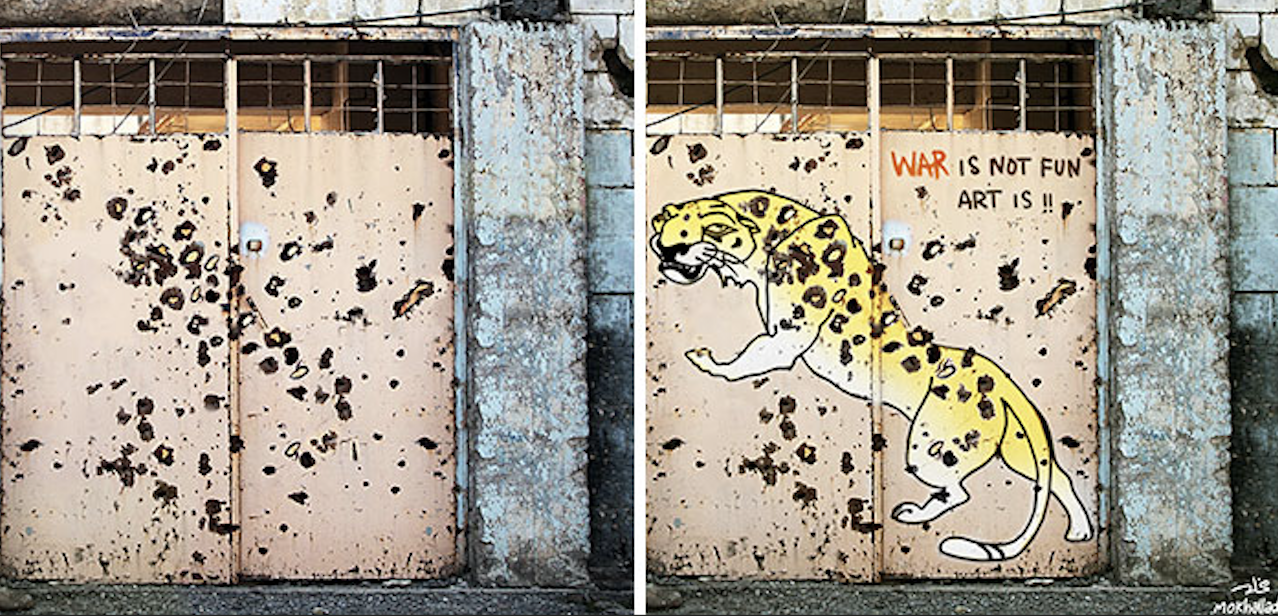
Across cities shaped by years of conflict, Iraqi visual artist Mukhaled Habeeb is engaging directly with the physical remnants of violence, transforming them into works that speak to memory, resilience, and the possibility of change.
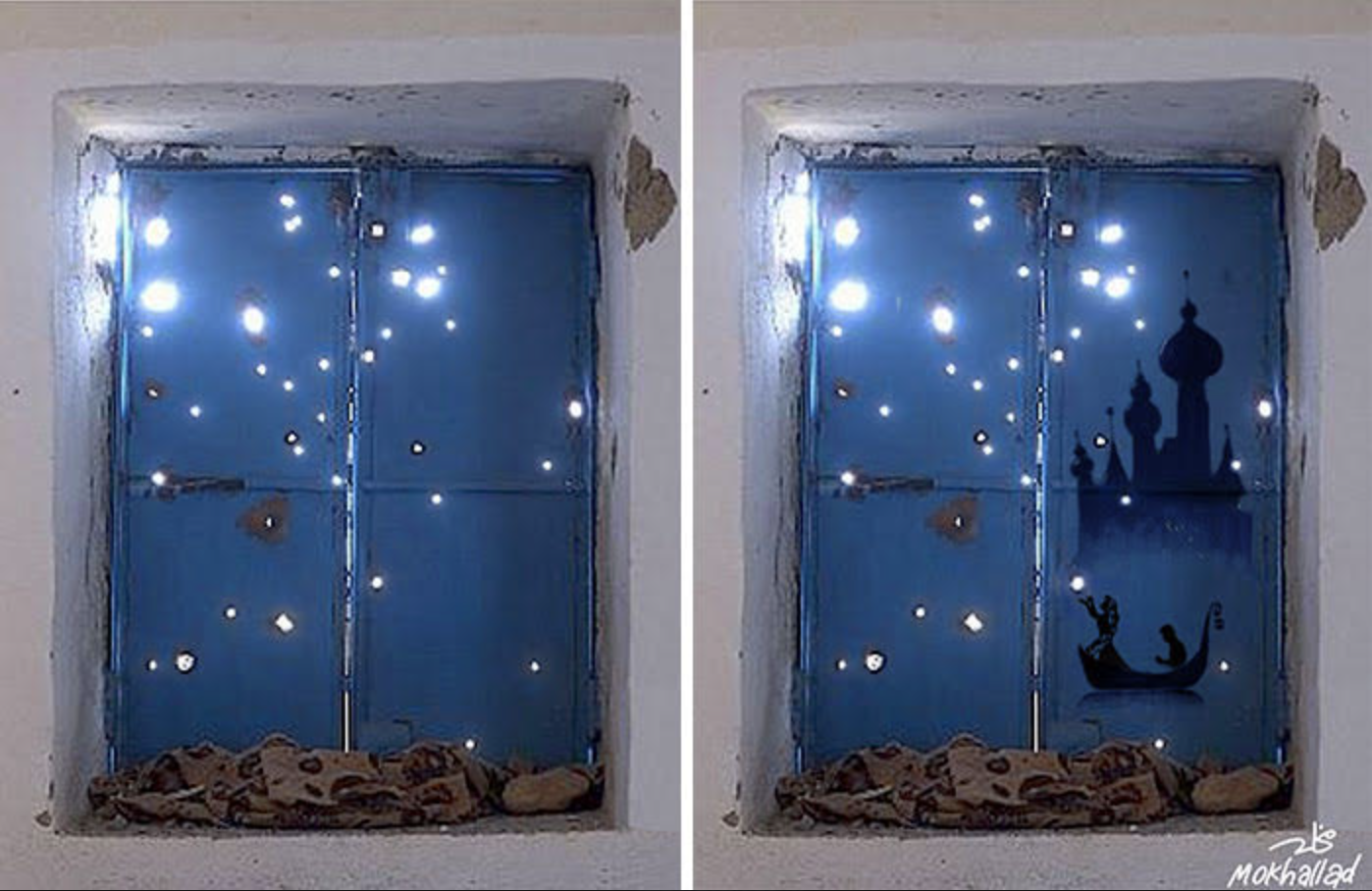


His ongoing Bullet Transformation Project takes bullet holes embedded in walls and urban surfaces as its starting point. Instead of concealing these traces, Habeeb incorporates them into carefully composed visual interventions, allowing each mark to remain visible while shifting its meaning. What once functioned as evidence of destruction becomes part of a new visual narrative.

Working with a restrained and deliberate approach, Habeeb uses minimal lines, geometric forms, and subtle figurative cues to activate each site. The strength of the work lies in this balance. The original damage is neither erased nor dramatized, but reframed. Each piece invites the viewer to pause and reconsider what they are looking at, turning a moment of impact into a space for reflection.


Within the regional art scene, Habeeb’s practice has often been likened to that of Banksy due to its socially engaged nature and its use of public space as a platform for commentary. Still, his work carries a distinctly local resonance, shaped by personal and collective experience within Iraq and the broader Middle East.


By transforming instruments and traces of violence into thoughtful visual compositions, the Bullet Transformation Project opens an alternative way of seeing. It suggests that even the most charged surfaces can hold the potential for reinterpretation, where art becomes a quiet but persistent gesture toward healing and awareness.