

You sit down to write your artist statement, and you face a terrifying blank page.
You know your latest body of work was born out of a deeply painful personal chapter. You want to be authentic, but you are terrified of scaring away a potential buyer.
The golden rule of sharing personal hardship in your art marketing is simple: Your struggle should act as the creative catalyst, not the emotional focal point.
The Trap of the Heavy Narrative
When a collector walks into my gallery, they are looking for a connection. They want to understand the human being behind the brush or the lens. But there is a very fine line between sharing your humanity and burdening your buyer.
If you dump unprocessed trauma into your portfolio context, you inadvertently change the collector’s internal monologue.
Instead of thinking, “This piece speaks to me,” they start thinking, “Oh wow, this is incredibly heavy. Am I supposed to feel sorry for them?”
Pity does not sell fine art. It makes people uncomfortable, and uncomfortable people walk out of galleries.
The X-Ray Approach: A Real-World Example
Recently, an artist shared his photography portfolio with me. He had spent decades battling a chronic, deteriorating medical condition.
Early in his career, he admitted to throwing his illness in people’s faces out of anger. He realized it quickly became a chain around his neck. Collectors saw him coming and thought, “Here comes that guy to tell us how sad his life is.”
So, he changed his approach entirely.
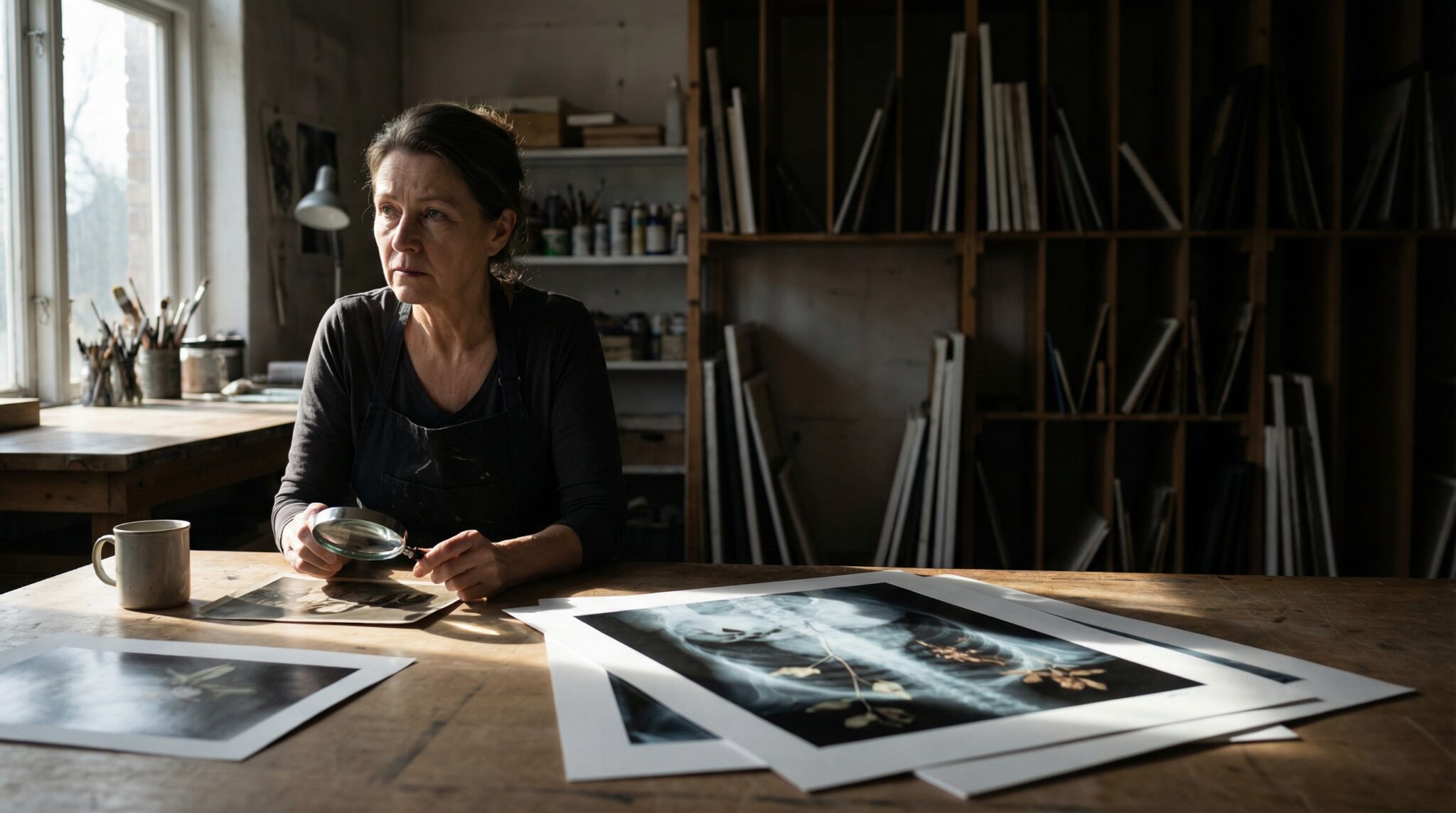
He began scanning his actual medical x-rays and MRIs, using them to explore broader visual themes of decay, physical structure, and deterioration.
He stopped complaining about his illness and started letting it inform his creative process. When he presents his work now, the medical history is simply the context. It explains where the work grew from, giving it profound depth without demanding the viewer’s emotional labor.
3 Rules for Professional Vulnerability
How do you strike this balance in your own artist story? Follow these practical steps:
-
Keep it in the rearview mirror: Frame your struggle as something that sparked the work, not an ongoing crisis you are asking the collector to navigate.
-
Focus on the universal: Translate your specific pain into a broader theme. Your medical struggle becomes an exploration of “fragility,” while your heartbreak becomes a study of “resilience.”
-
Let the art do the heavy lifting: Give just enough backstory to intrigue the buyer. Let the visual impact of the work carry the rest of the emotional weight.
Final Takeaway
Vulnerability is a powerful marketing tool when handled like a professional.
When you share your struggles constructively, you stop being a victim in the eyes of the collector. You become an authority over your own narrative.
You transform your personal hardship from a warning sign into a compelling bridge that draws the buyer closer to your art.
Question for Readers
Have you ever struggled to write about a painful inspiration behind your work? How do you balance being authentic with maintaining a professional boundary? Share your experiences in the comments below.