

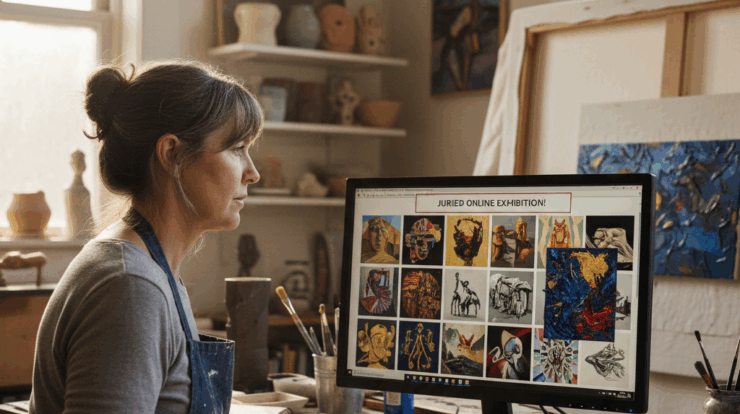
Every artist knows the thrill of an acceptance email: “Congratulations, your work has been selected…” That rush of validation can make juried shows tempting. In recent years, online and hybrid exhibitions have multiplied, promising exposure, recognition, and a stronger CV. But are these shows truly worth your time, money, and energy?
The answer depends less on the show itself and more on your goals, and on being clear-eyed about what you’re actually getting.
Online-Only Shows
These are the most accessible: no shipping, framing, or travel costs. For the entry fee, your work appears in an online gallery. The upside is convenience and, sometimes, the chance to add a line to your CV.
The downside is that many of these shows exist in name only. Your work might technically be “on display,” but if the organizer’s idea of promotion is uploading a web page and moving on, the benefit to you is minimal. Some platforms even lean on popularity contests—artists must drum up votes from friends and family to advance. That shifts the emphasis away from quality and onto personal networks. Unless you’re getting meaningful exposure to new audiences, the value is thin.
Hybrid Exhibitions
Some organizations run exhibitions that exist both online and in a physical space. These can be more promising, especially if the physical component is hosted by a gallery or institution with an established audience. Even if your piece doesn’t travel to the venue, the association with a reputable show and the potential for press or critical review can be valuable.
That said, hybrid shows still vary widely in quality. Research matters: look at who juries the show, what kind of work they’ve selected in the past, and whether the event has a track record of meaningful promotion.
Physical Juried Shows
Traditional juried shows—held in galleries or museums—require more effort and expense. Entry fees are higher, framing and shipping add costs, and there’s often travel involved if you want to attend. But the rewards can be richer.
Showing in person gives you the chance to network, meet collectors, receive critical feedback, and see how your work stands alongside peers in a real-world setting. Reviews or publicity that grow out of these exhibitions can carry weight, and the experience itself—navigating submissions, attending openings, building professional presence—can strengthen your career in ways online exhibitions rarely match.
What Motivates You?
Artists enter shows for different reasons:
-
Building a CV. A juried acceptance adds credibility, especially early in a career. But keep in mind that a handful of well-chosen exhibitions says more than dozens of minor ones.
-
Exposure. The right show can put your work in front of qualified eyes. Ask yourself: who will actually see this?
-
Feedback. Some organizations provide juror comments or written reviews. These can be helpful, especially when they offer insight into where your work fits.
-
Recognition. Awards and mentions can boost confidence and open doors, but they aren’t the only measure of artistic value.
The Pitfalls
Not all shows are created equal. Some are organized by institutions genuinely committed to engaging the art community. Others are simply revenue machines, set up to collect entry fees with little thought for artists’ growth. If the primary motivation of the organizer is profit, chances are slim you’ll benefit much from participating.
A Balanced Approach
Juried shows aren’t inherently good or bad. The key is to be selective. Decide in advance how much time and money you’re willing to invest each year, and weigh opportunities against that budget. Look closely at the jurors, the track record, and the promotional reach.
If your primary goal is sales, juried shows—especially online-only—are unlikely to deliver. But if you’re looking for CV credibility, feedback, or professional experience, the right opportunities can play a role in your growth.
Like any investment, the value depends on the return. Go in with open eyes, choose carefully, and remember: participating in juried shows is just one tool in building an art career, not the whole kit.