

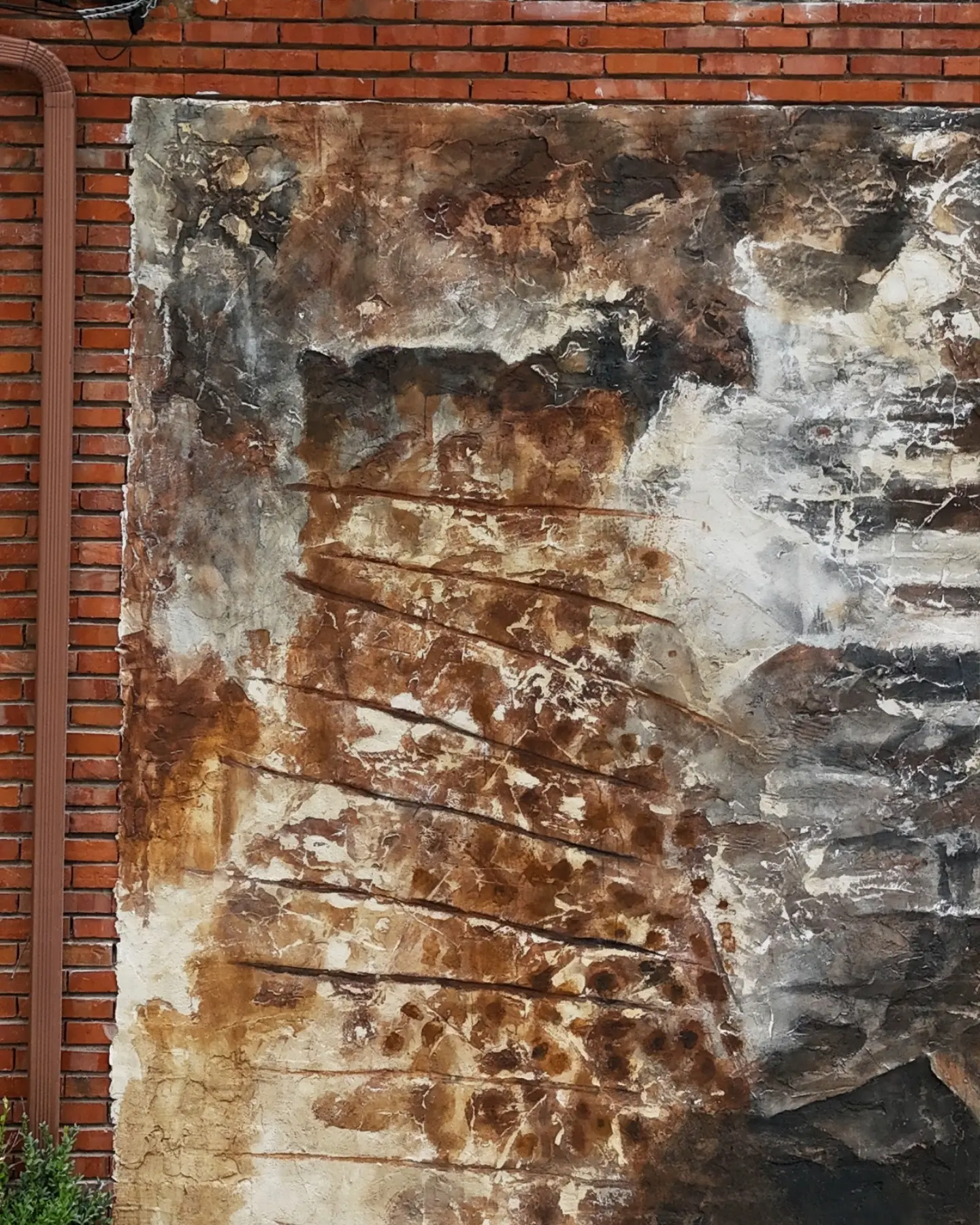
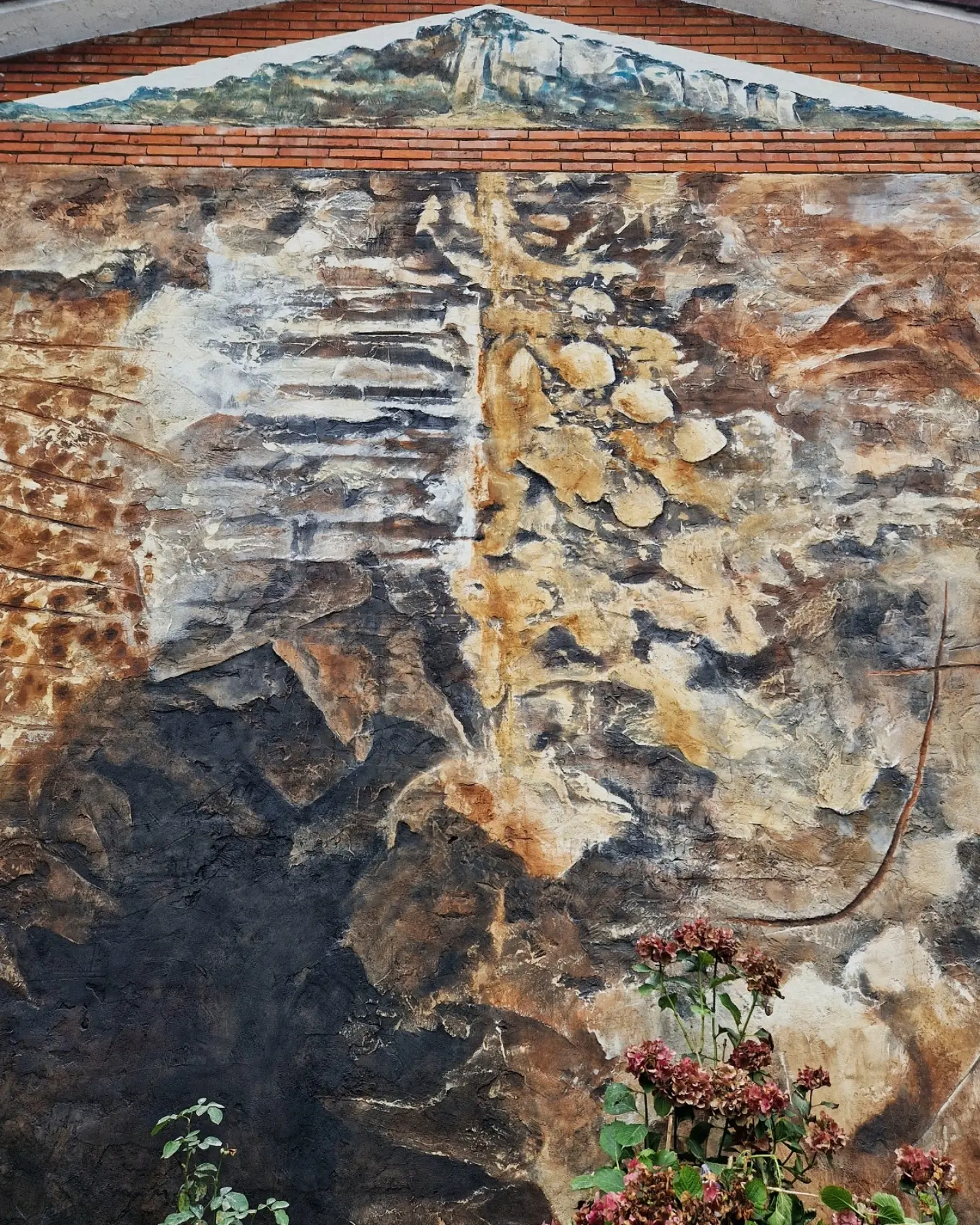
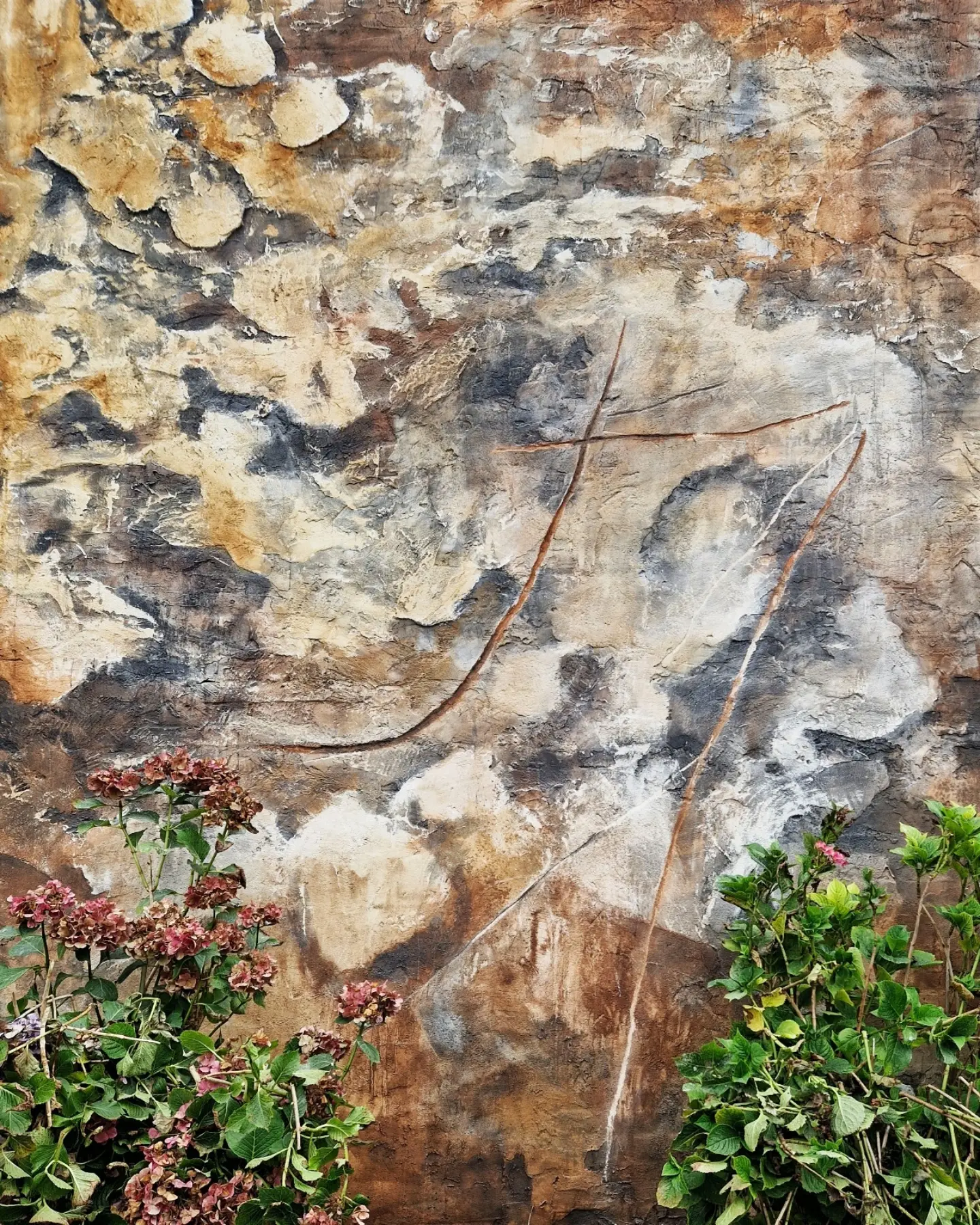
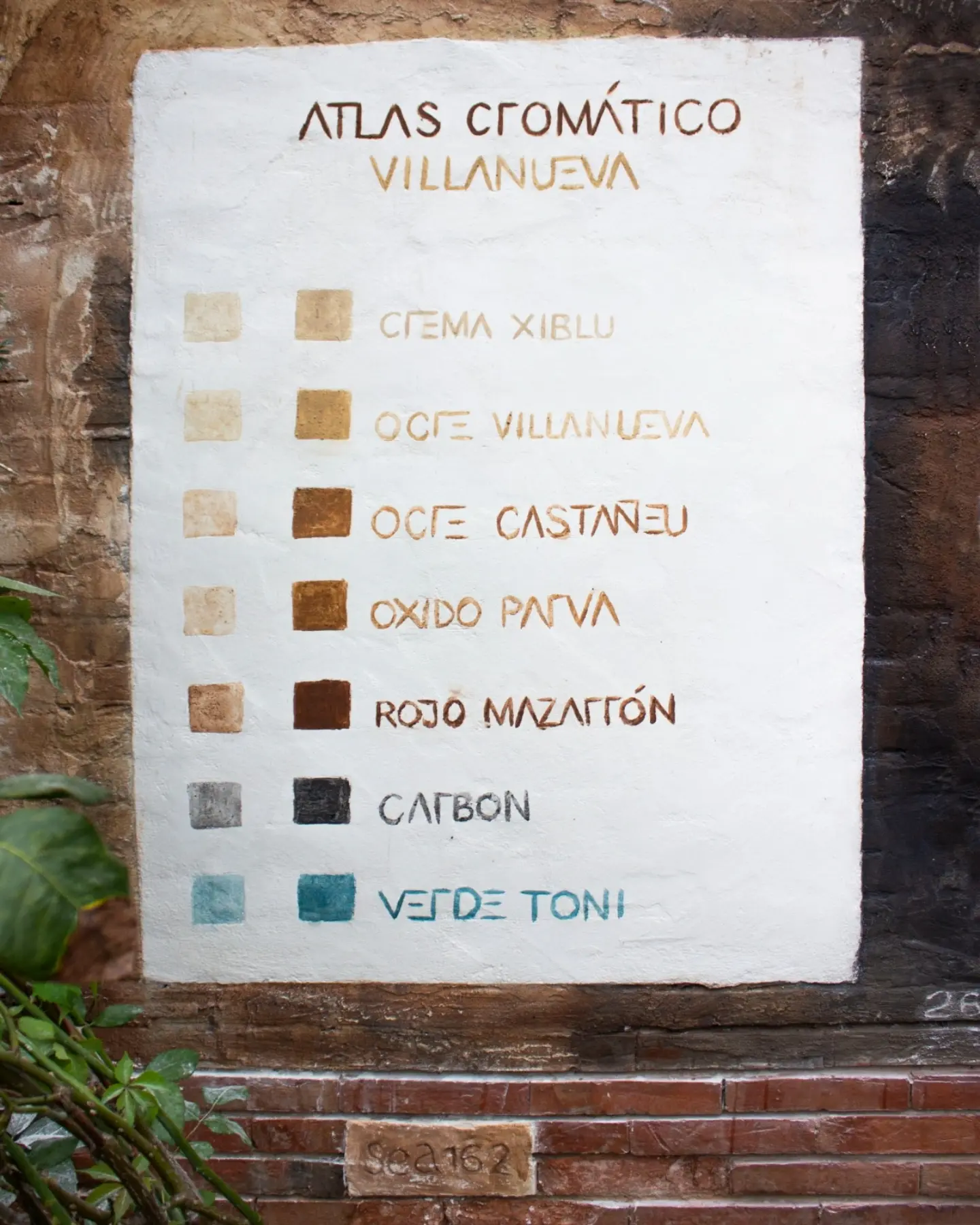
Sea162’s 2026 mural “La Dura Montaña” brings the landscape and history of Santo Adriano onto a wall in Villanueva de Santo Adriano, Asturias. Its pigments came from minerals at the area’s former iron mines, extracted with the help of local residents. The work is part of Patrimonio Vivo, a community heritage project developed with the La Ponte research centre and ecomuseum.
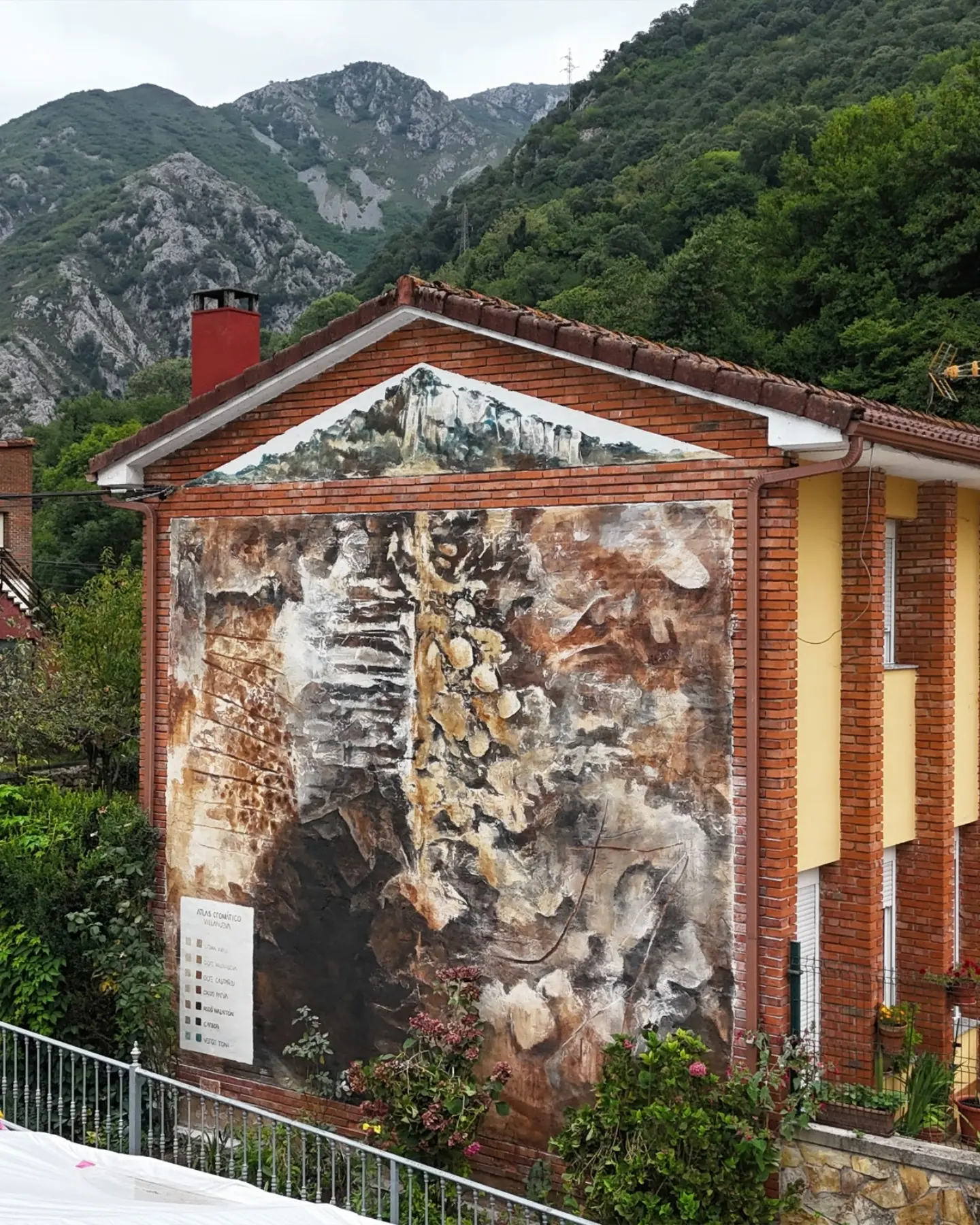
The artist names the Xiblu mountain, engravings at Cueva del Conde, the three-line deer figures of the Santo Adriano rock shelter and the iron mines among the histories gathered in the painting. These references reach across the surrounding landscape, from prehistoric marks to the traces of mining. The mineral pigments make that connection physical: material taken from the territory was used to depict it.
La Ponte’s plans for Patrimonio Vivo called for residents to join field trips to collect rocks, minerals and clays for the mural. The ecomuseum also described informal village gatherings where neighbours could learn about the project before the painting began. Sea162’s account of working with residents at the mines shows how that collective process entered the making of this particular wall.
The approach belongs to Sea162’s wider Entre Tierras project, in which fieldwork and the collection of local minerals inform site-specific paintings. Here, the palette has a particularly direct relationship to one of the mural’s subjects: Santo Adriano’s iron-mining past. The artist frames the imagery as a gesture of respect toward the area’s ancestors.
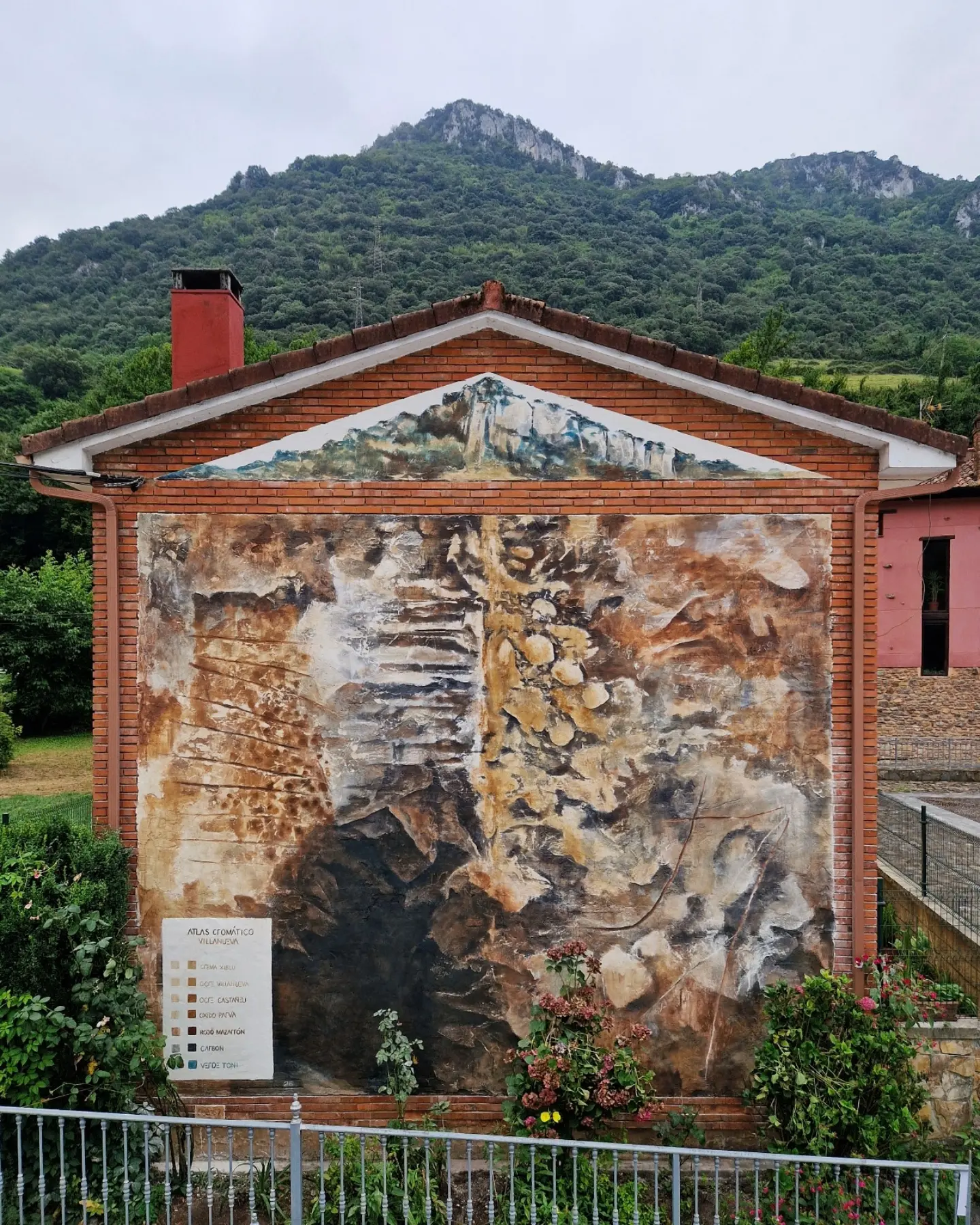
La Ponte proposed the mural as an addition to its cultural itineraries through Santo Adriano, which connect visitors with sites including Cueva del Conde, the Santo Adriano shelter and the former mines. Patrimonio Vivo received support through the 2025 Ibermuseos Education Prize; “La Dura Montaña” is the wall painting that emerged from that work with the village.
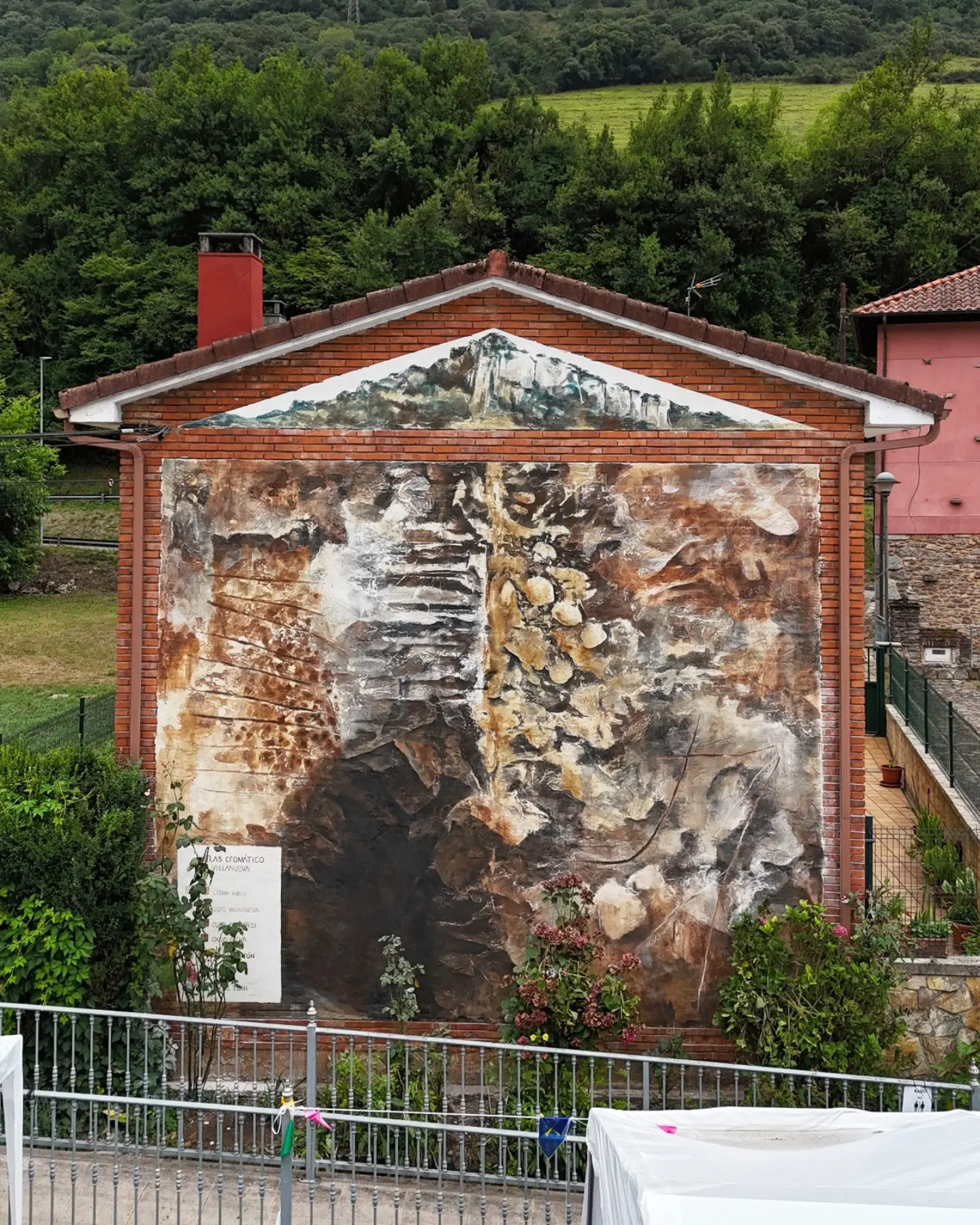
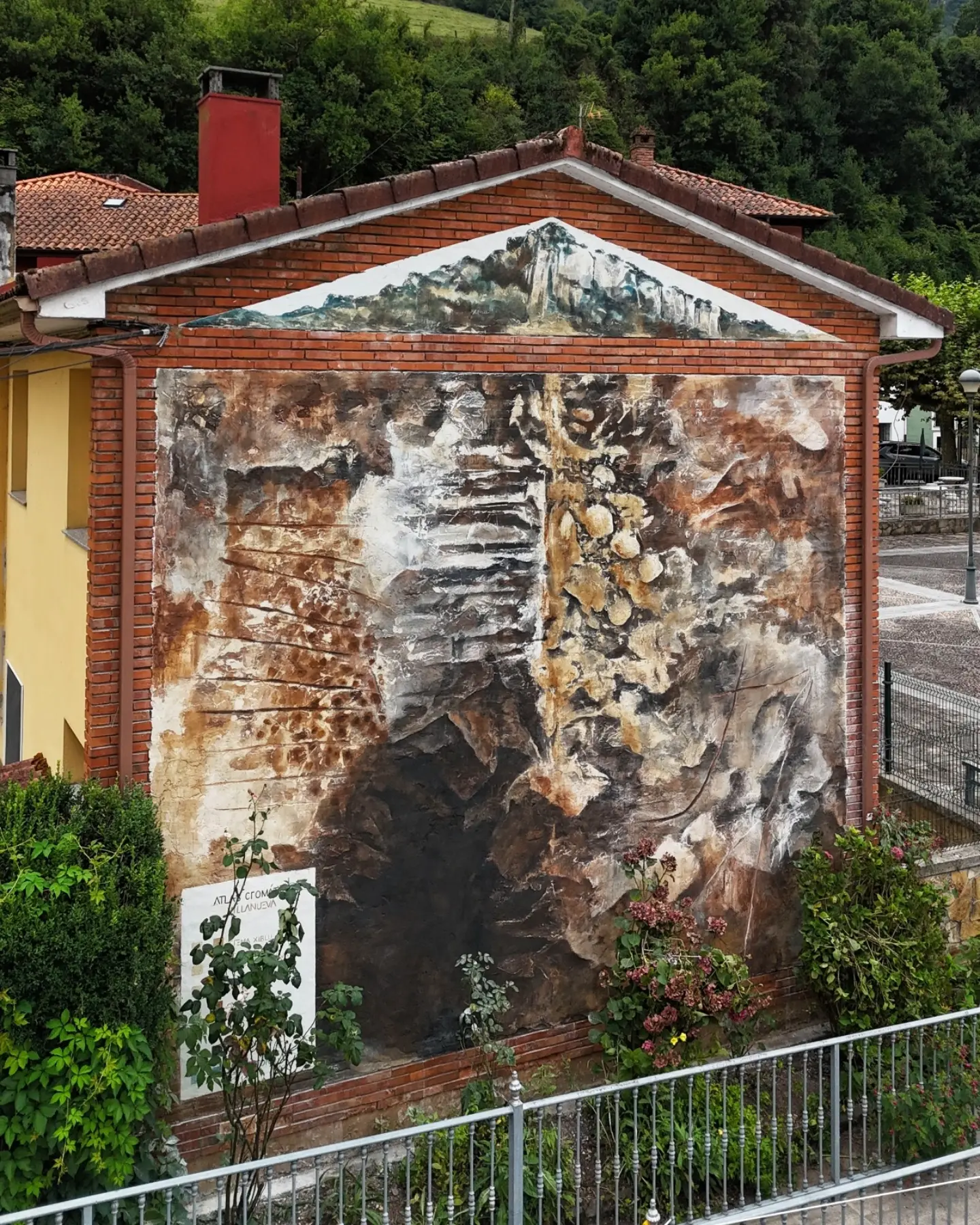
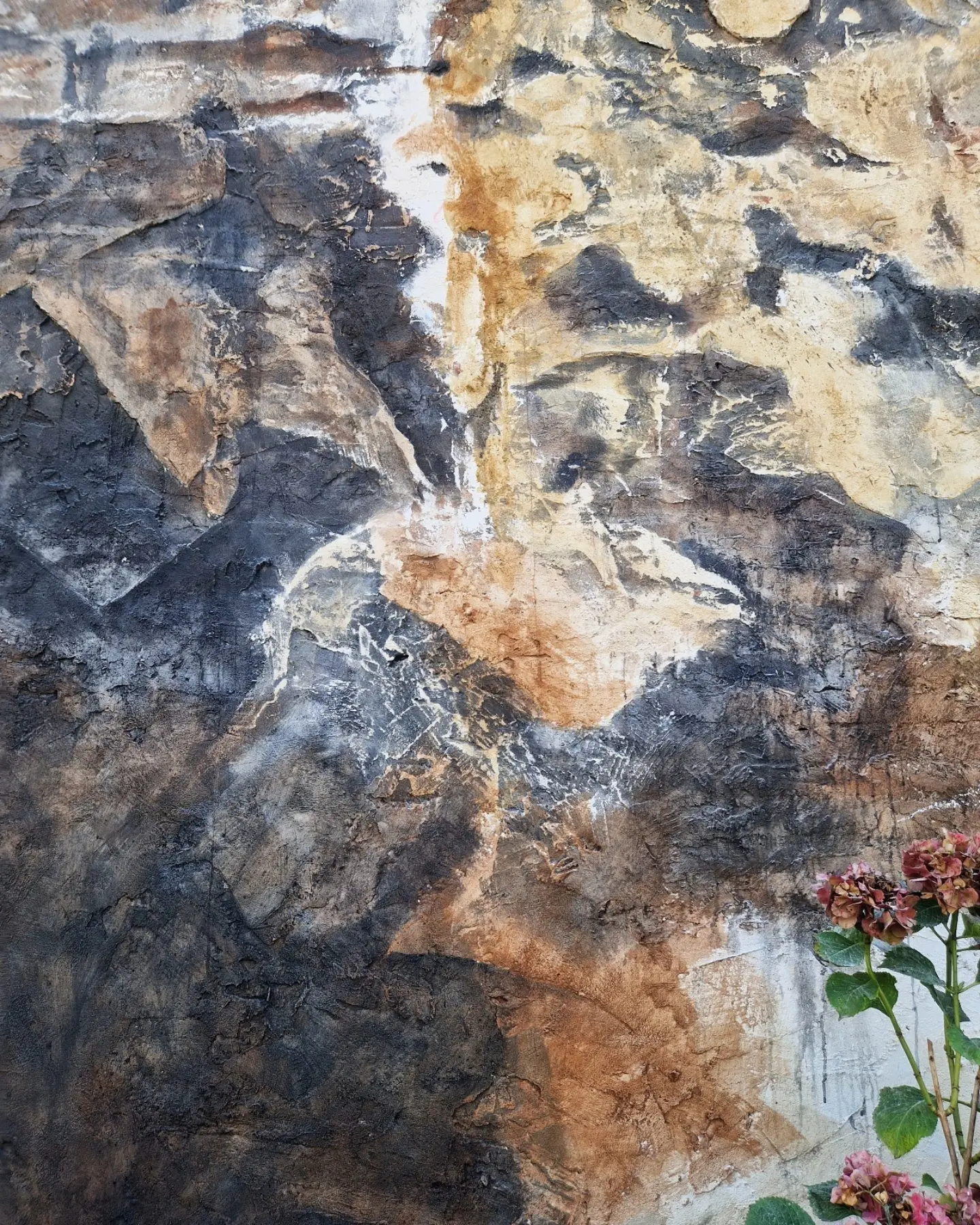
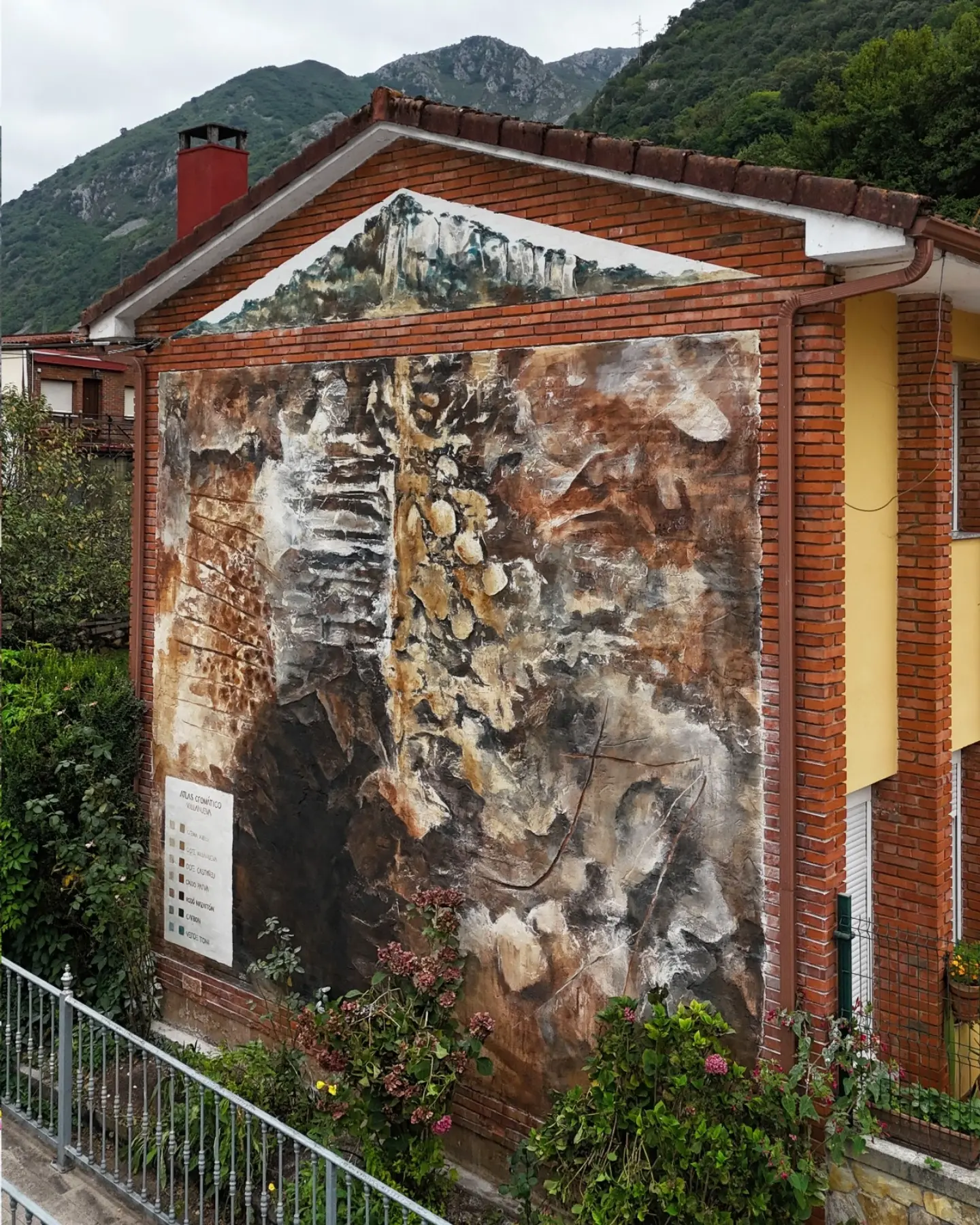
Images via @sea_162 on Instagram.