

Artist Kendra Stone paints wildlife in moments of stillness, focused on observation and restraint. See more of her portfolio on her website.
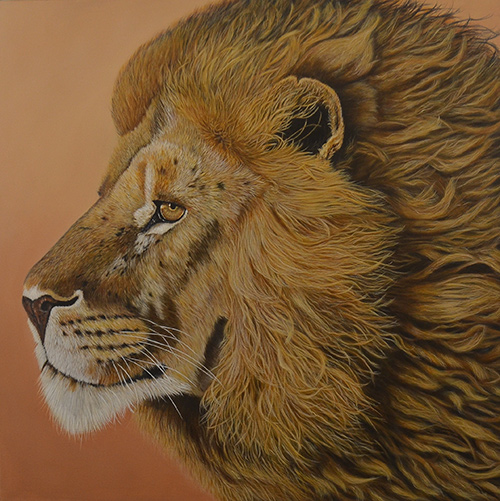
“Gaze of the Wild” acrylic on canvas, 24” x 24”
I paint wildlife as a practice of attention. I’m interested in presence — the moment when an animal becomes fully itself in stillness, vigilance, or rest. My work is grounded in observation and patience, allowing form and gesture to arrive rather than be imposed. Over time, I’ve come to trust restraint as much as detail, and to let the image carry its own weight.
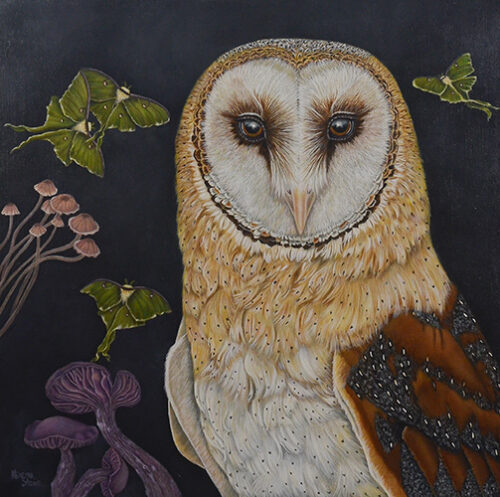
“Ladies of the Night” acrylic on canvas, 24” x 24”
I work primarily in acrylic, building images through layered decisions rather than single statements. I’m attentive to structure first — bone, balance, weight — before allowing surface detail to develop. I tend to work close, returning to the same areas until the relationships feel resolved. The goal isn’t polish, but an image that feels considered, stable, and present.
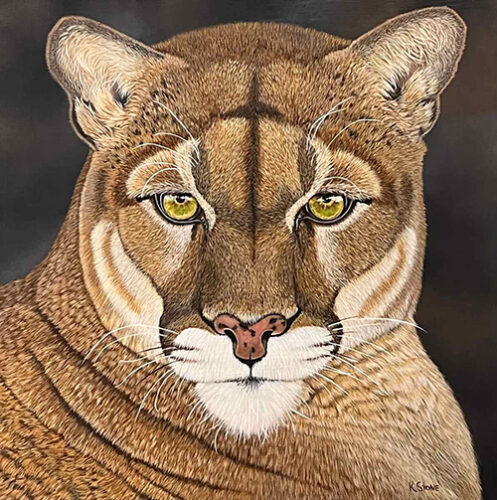
“Puma in Repose” acrylic on canvas, 24” x 24”
I didn’t come to painting through a childhood devotion to drawing and coloring. I spent part of my early years in Alaska, surrounded by boreal forest, wildlife, and extremes — long months of cold starlit dark, then bright, hot midnight sun. Most days I had dirt under my fingernails and feathers in my pockets. Wherever I’ve lived since, I’ve looked for animals. Their absence feels like a kind of hollowing.
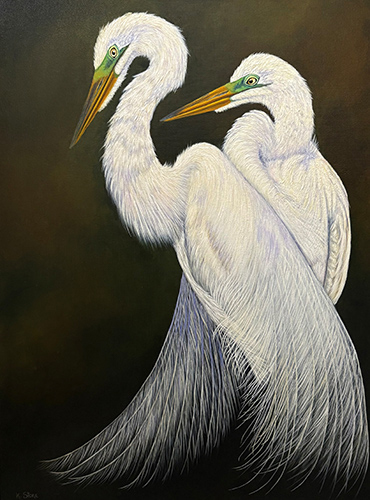
“An Elegant Pairing” acrylic on canvas, 24” x 18”
My father was a hunter like most men in our rural Alaska community. Hunting was how families fed themselves and each other. I understood early that animals were part of a living system, not just symbols or stories. That experience left a mark. My work now isn’t nostalgic. It’s a way of returning to attention and staying there.
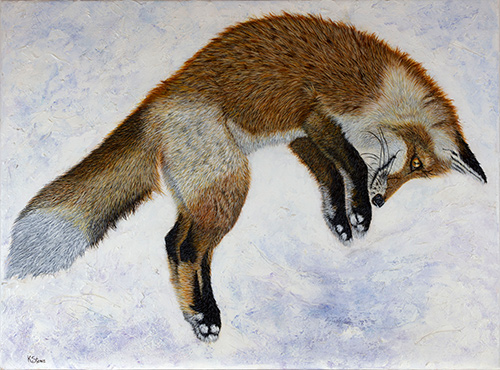
“Leap of Faith” acrylic on canvas, 18” x 24”
Before I ever painted, I watched. I preferred tracking to chasing — noticing the subtle signs, the shifts in shadow, the shape of what passed through. That same instinct carries into the studio: I begin with structure, watching for the form beneath the surface. Every portrait begins by following, not forcing, what wants to emerge.
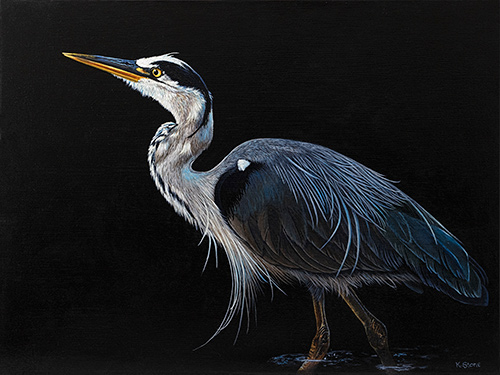
“Nightwatch” acrylic on canvas, 18 x 24”
I use color to shift mood, not just to represent it. Sometimes a single saturated hue pulls forward a shape or gesture, giving the painting more presence without pushing it toward hyperrealism. I pay close attention to light, especially in the eyes—where even a small shift in value can turn surface into life. My work aims for realism, but always stays painterly.
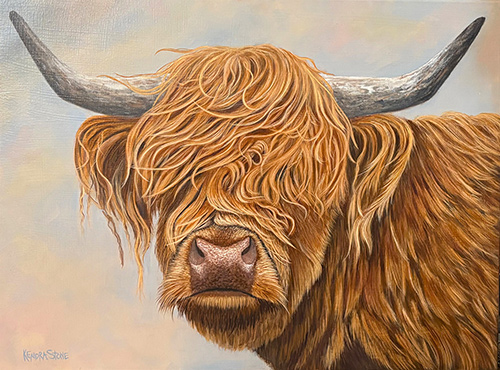
“Buttercup the Highland Cow” acrylic on canvas, 18″ x 24”
Warmth can come from tone as much as subject. I start with darker values and work toward light, layering acrylics to build texture and depth. Thin glazes let me adjust color slowly — holding softness while defining form. What looks warm in the final image is usually built from neutrals. Small shifts in hue can change the temperature of a piece without announcing themselves.
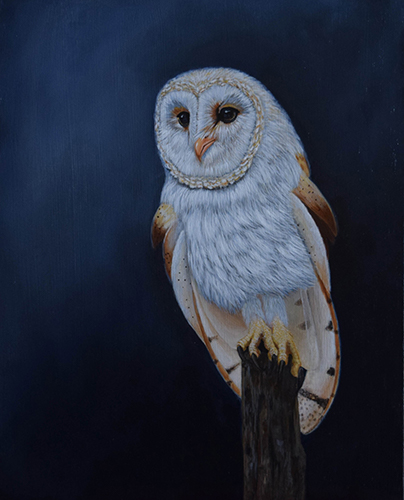
“Night Owl” acrylic on canvas, 20 x 16”
I use dark backgrounds deliberately — not to isolate the subject, but to let the form emerge without distraction. A flat field of darkness can hold more presence than a detailed environment. What’s left out can create more tension than what’s described.
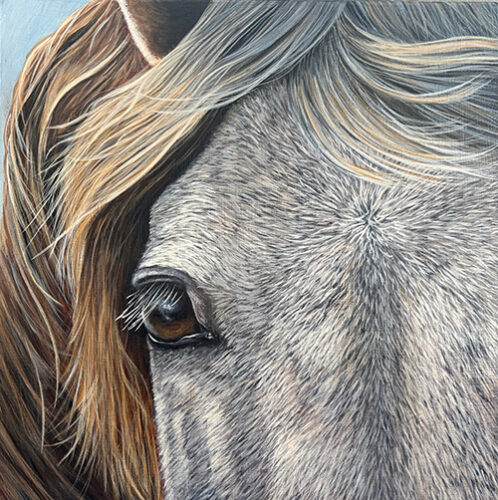
“Within Reach” acrylic on canvas, 12″ x 12″
Wildlife and wild places infuse my life, bringing an awareness of their fragility and the narrowing margins they occupy.
I paint to stay close — and to hold what I’ve seen in a form that doesn’t disappear.