

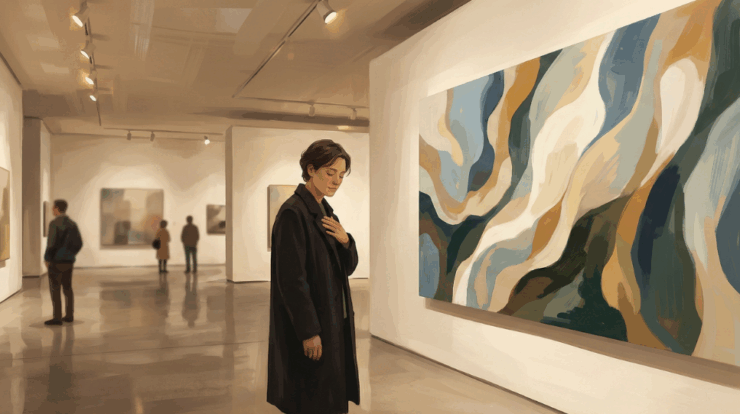
Every so often, an artist witnesses something remarkable: a viewer stands before a piece and is visibly affected. Sometimes it shows up as tears, but just as often it’s a long pause, a shift in posture, a softened expression, or the unmistakable sense that something deep has stirred. These moments transcend technique or trend — they reveal the true power of connection.
In my last article, I wrote about how the real measure of art isn’t objective quality but the connection it makes with the viewer. That connection sometimes arrives quietly, and other times it hits with emotional force. When it does, artists often wonder what to do with it. Do you engage? Do you give the person space? And how should you interpret that reaction?
Below are some thoughts on understanding and navigating these moments with care.
Why Strong Emotional Reactions Matter
When someone has a powerful response to your work, it means the piece reached a place beyond the surface — a memory, a loss, a joy, a longing, a question they’ve been carrying. These reactions are rare. They’re also among the highest compliments an artist can receive.
Long before a viewer becomes a collector, they become a participant in the emotional space your art creates. That’s a profound exchange. It means what you’ve produced isn’t just visually appealing — it’s meaningful.
This is why, even if no sale happens in the moment, the experience itself has value. It’s a reminder that your work carries impact you may never fully see.
How to Respond in the Moment
When someone is deeply moved by your work, the instinct might be to jump in, offer explanations, or even shift into sales mode. But strong emotion is delicate. A thoughtful response makes all the difference.
Here’s a simple rhythm to follow:
Pause and honor the moment.
You don’t need to fill the silence. Let the viewer process. Whether the reaction shows up as tears, stillness, or quiet reflection, their experience is valid.
Offer presence, not pressure.
A gentle acknowledgment — “Take your time” or “This piece means a lot to many viewers” — can be enough. They may choose to open up; they may not.
Let the viewer lead the interaction.
Some will want to share what they’re feeling. Others will step back and need space. Either response is perfectly fine.
Avoid shifting into sales mode.
As tempting as it is, emotional moments are not closing moments. Trying to sell too quickly risks flattening what just happened. There will be time later — and in many cases, a deeper connection leads to a more meaningful sale down the road.
Your role is to support, not steer.
Why Emotional Resonance Reaffirms Your Purpose
Artists often question whether their work is reaching anyone. Strong reactions offer an unmistakable answer: yes. They reaffirm that the hours spent refining technique, chasing ideas, and pushing through doubt are worthwhile.
When a viewer is visibly moved, it demonstrates that what you’re creating is more than decoration — it’s a bridge. These moments remind you that your work carries the capacity to comfort, challenge, inspire, or heal. That’s the deeper purpose many artists are ultimately chasing, whether consciously or not.
The Long Tail of Emotional Impact
One of the surprising things about emotional responses is how often they outlast the moment. A viewer may not buy a piece immediately, but they remember how it felt. They may return days or weeks later. They may commission something. They may become a long-term follower of your work.
Emotional connection creates memory — and memory creates momentum.
If your art has moved someone strongly once, it will likely continue to do so.
Connection Is the Heart of the Work
In the earlier article, I emphasized that “good” is not an objective measure — connection is. Strong emotional responses are simply connection at its fullest intensity. They reveal the real exchange happening between you and your audience.
Not every viewer will feel something powerful. They’re not supposed to. But when a viewer does, it’s a reminder that your art is doing exactly what art at its best has always done: touching the human experience in ways that words often can’t.
What about you?
Have you ever seen someone respond strongly — emotionally or otherwise — to your work? How did you handle the moment, and what did you take from it? I’d love to hear your experiences in the comments.