

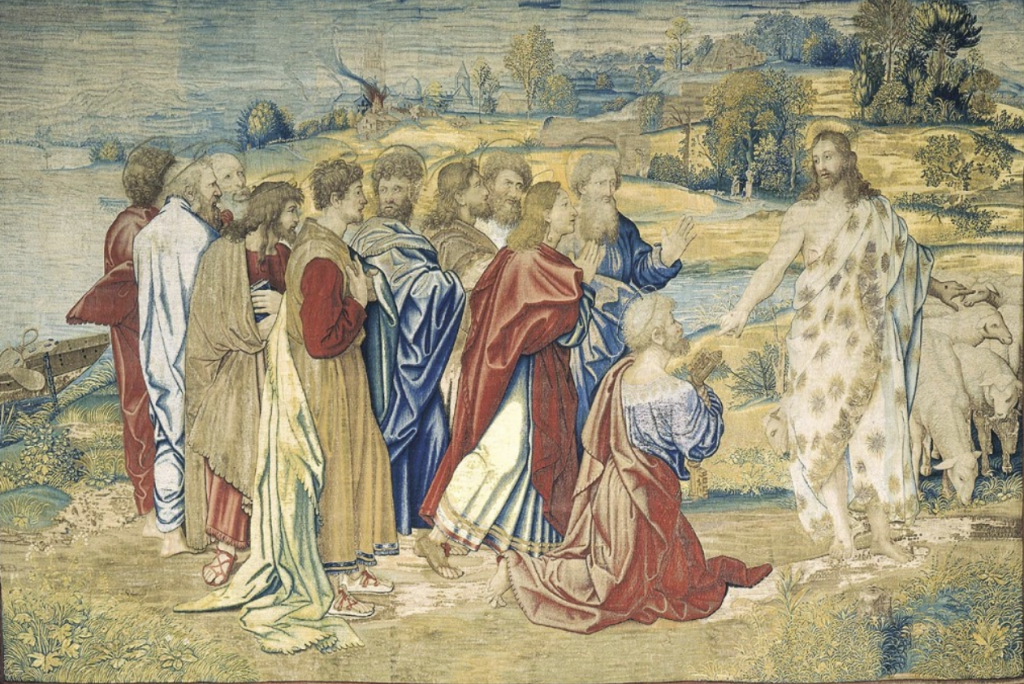
Renaissance tapestries are the most underestimated subject in art history. As expensive and enormously large works of art, tapestries attributed to the owner’s wealth and status more than anything else in Renaissance Europe. While only a few Renaissance tapestries remain intact today, their value and magnificence deserve a spotlight. Although they appear in the background of television shows such as The Serpent Queen and Becoming Elizabeth, most viewers might not know their historical significance or production. Yet, in their simplest forms, Renaissance tapestries are made of silks, wool, gold, and silver threads. Here’s everything to know about Renaissance tapestries.
Bibliography
Hans Baron. “Fifteenth-Century Civilization and the Renaissance.” In The New Cambridge Modern History, edited by G. R. Potter, 50–75. Cambridge: Cambridge University Press, 1957.
Adolph S. Cavallo. The unicorn tapestries at the Metropolitan Museum of Art. Metropolitan Museum of Art, 1998.
Elizabeth Cleland, ed. Grand Design: Pieter Coecke van Aelst and Renaissance Tapestry. Metropolitan Museum of Art, 2014.
Rosamund Garrett, and Matthew Reeves. Late Medieval and Renaissance Textiles. London: Sam Fogg, 2018.