


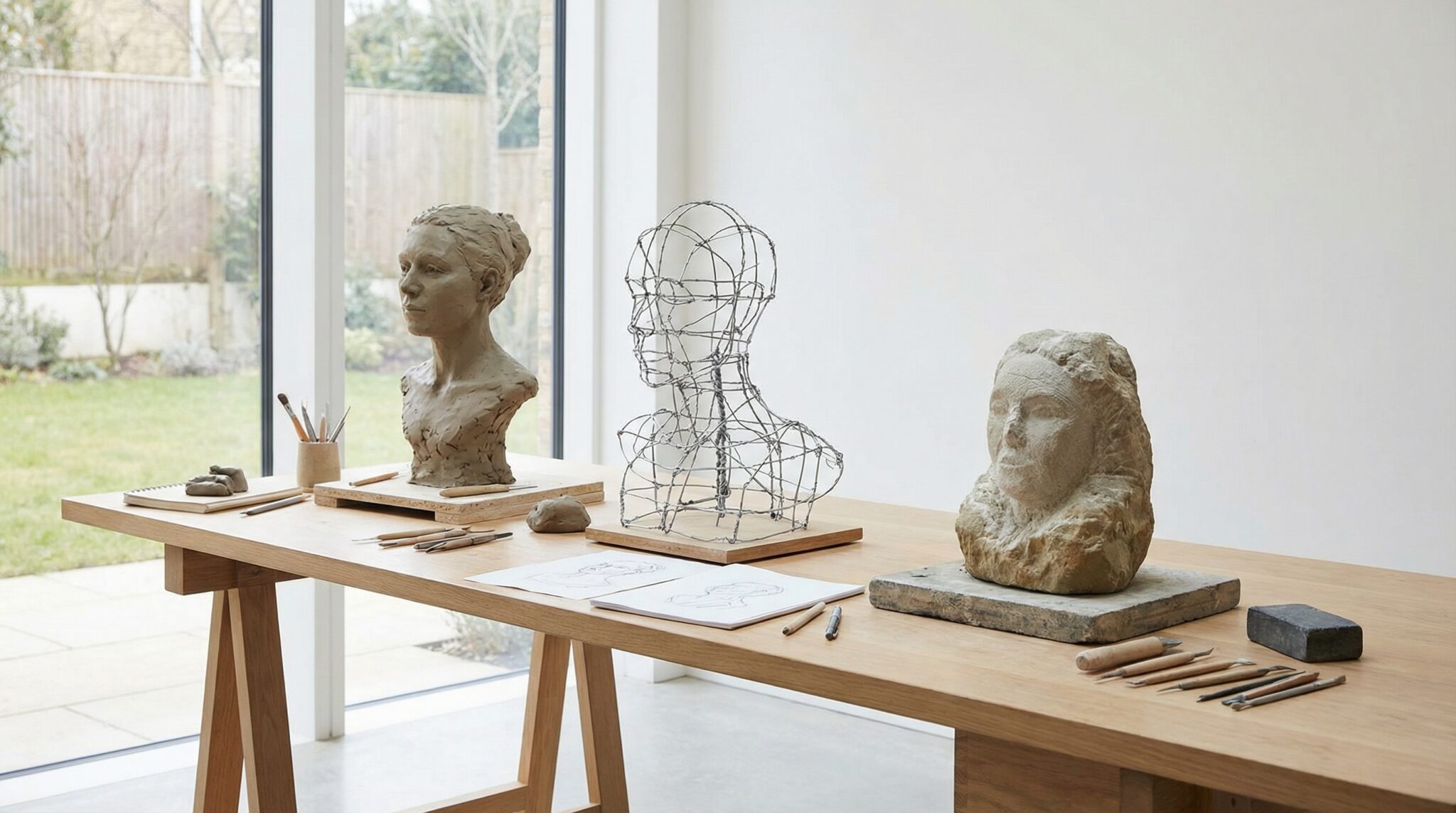

You stare at the half-finished piece on your workbench. The initial burst of inspiration has completely evaporated, replaced by a stubborn, unyielding block. Your entire studio output is suddenly held hostage by this single, difficult artwork.
The solution isn’t to force your way through the frustration or abandon the studio for the day. The secret to continuous momentum is stepping away and letting multiple projects share the burden of your creative energy. While we will focus primarily on the sculptor’s workflow here, this strategy applies just as effectively to painters, photographers, and other artists.
1. The Psychology of the Single-Piece Trap
Working on a single artwork from start to finish creates a high-pressure environment. When you hit a structural or aesthetic wall, the anxiety spikes. Your inner monologue quickly spirals: “Why isn’t this texture working? Am I losing my touch?”
This tunnel vision paralyzes you. Instead of problem-solving, you end up overworking the piece, forcing solutions that lack spontaneity. The psychology here is simple: when your entire studio’s productivity hinges on one stubborn project, the mental weight becomes too heavy to sustain.
2. The 3-to-5 Project Framework
During a recent discussion with an experienced wood sculptor, a brilliant operational strategy emerged. He noted that starting with a piece of character wood always brings great initial ideas, but inevitably, he gets stuck. His solution? He maintains an inventory of three to five active projects at all times.
If you implement this in your own studio, you create an environment of constant workflow. Whether you’re chiseling stone, painting a canvas, or editing a series of photographs, when one piece presents a challenge you aren’t ready to solve, you don’t stop working. You simply pivot.
-
Active Incubation: While your hands are busy on a secondary project, your subconscious is quietly untangling the compositional issues of the first piece.
-
Zero Downtime: Frustration no longer equals a halted studio. You maintain momentum by shifting your focus to an artwork that is currently flowing smoothly.
-
Reduced Attachment: Rotating your attention prevents you from hyper-fixating on minor details, allowing you to return to a difficult piece later with objective, fresh eyes.
3. How to Implement the Pivot
Keeping multiple pieces in play requires discipline. It is not an excuse to leave dozens of artworks half-finished and abandoned in the dark corners of your workspace.
Limit your active rotation strictly to three to five pieces. When you hit a wall, physically set the frustrating piece aside. Place it out of direct sight if necessary. Pick up the next project and immediately begin working. Treat this rotation not as a distraction, but as a deliberate studio mechanism to protect your creative energy.
One Final Takeaway
Your studio time is too valuable to waste staring down a project that refuses to cooperate. By managing a controlled rotation of active pieces, you eliminate artist’s block and ensure that your creative business is always moving forward.
What’s Your Ratio?
How many active projects do you currently have rotating in your studio, and how do you decide when it’s time to switch between them?