


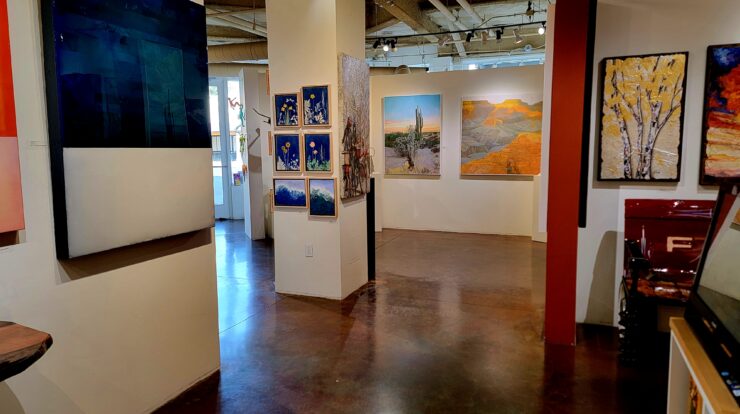

It is a proposal I hear often, and on the surface, it makes perfect logical sense. An artist might approach me and say, “I know you don’t have space for full representation right now, but why not dedicate just one wall to new and upcoming talent? You could rotate it every month or two. That way, you get to test if my work sells, and I get exposure. It’s a win-win.”
I love the spirit of this idea. It suggests experimentation and opportunity. However, having run a gallery for over two decades, I have found that the “revolving wall” concept—while great in theory—is often disastrous in practice.
If you have ever wondered why galleries are so hesitant to take on short-term trial runs, the answer usually comes down to two things: the speed of the market and the hidden weight of logistics.
The Slow Burn of Art Sales
The biggest misconception about the “revolving wall” strategy is the assumption that art sells quickly. The thought process is: Put the art on the wall, see if people like it, sell it, move to the next.
In reality, introducing a new artist to collectors is rarely an overnight success story. It requires significant time, effort, and energy to familiarize our clientele with a new name and a new style.
My experience has shown that when we bring on a new artist, it often takes six months, a year, or even 18 months before sales really kick in. Collectors often need to see the work multiple times. They need to see that the artist is consistent and that the gallery is committed to them. A one-month or two-month window simply isn’t enough time to gather meaningful data.
If I rotate an artist out after sixty days because they haven’t sold, I haven’t necessarily proven that their work isn’t marketable. I’ve just proven that the art market is slow. By focusing on short-term rotations, a gallery risks giving up on an artist right before they were about to gain traction.
The Logistical Nightmare
The second hurdle is one that artists rarely see because it happens in the back office. To an observer, rotating art looks simple: take one painting down, put another up.
But for a professional gallery, the physical hanging of the art is about 5% of the work. The other 95% is the administrative machinery required to support that art. Every time a new piece comes through the door, we have to inspect, inventory, label, enter into the database, and manage the expensive logistics of shipping and crating.
If we were to rotate a “featured artist” wall every month, we would be perpetually stuck in a cycle of shipping logistics. That consumes the staff’s “bandwidth”—time that should be spent calling collectors and selling art, not printing inventory labels for a show that will be gone in four weeks.
Testing the Waters vs. Making a Commitment
Does this mean galleries never experiment? No. But smart galleries today are moving away from physical “test runs” and toward digital ones. For example, we use our online catalog and programs like ArtBoost to feature artists digitally and gauge collector interest without the logistical overhead of shipping physical inventory. This allows us to see what resonates before we clear wall space.
However, the ultimate goal—for both the gallery and the artist—should always be long-term representation.
The most successful gallery model is one of depth rather than breadth. We are better off focusing on a smaller group of artists and showing them for years, not months. This allows us to tell a complete story and gives our collectors the confidence that we believe in the work for the long haul.
My advice to you? Don’t look for a one-month fling with a gallery. Look for a partner who is willing to invest the time it takes to truly build your career. Representation is a marriage, not a speed date.
What has been your experience?
Have you ever participated in a short-term “pop-up” style show or a trial run with a gallery? Did you find that the limited time constraint helped create urgency, or did it feel like there wasn’t enough time to find an audience? I’d love to hear your stories in the comments below.