




Consumption of Tobacco in Antiquity
Archaeological findings evidence a long history of tobacco use in the Americas dating back tens of thousands of years. The Spanish introduced tobacco to Europe in the 16th century after they observed its usage among the native people of Mesoamerica and South America. By the 17th century, it was cultivated across Africa, the Middle East, and Asia.
The Proliferation of Snuff Tobacco
Snuff is a specific form of tobacco consumption involving the inhalation of finely ground tobacco that gained popularity in Europe, particularly in French and Spanish aristocratic circles. The usage of snuff became part of courtly life, and its use developed into a social act in itself.
The Development of Snuffboxes
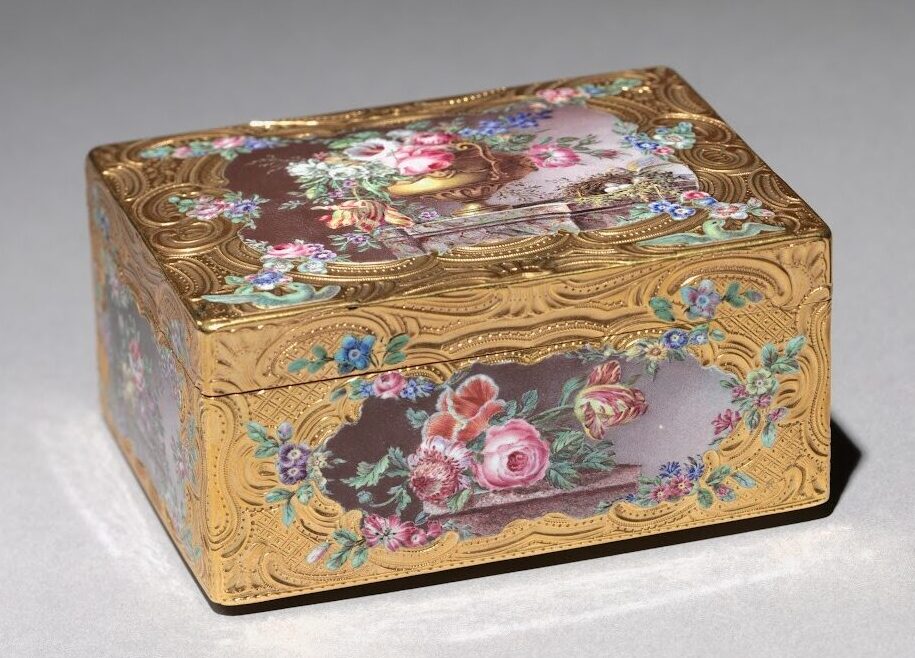
Snuff’s powder form and portable nature led to the creation of small containers known as snuffboxes, which became a popular medium for creative display. What started as a practical item evolved into personal adornments and status symbols, embodying the creativity and sophistication of the period.
Medium for Decorative Art
While the earlier forms of snuffboxes were humble objects crafted from wood, horn, and metal, over time these practical containers transformed into symbols of wealth and refinement. Artisans across France, Germany, England, and Switzerland employed luxurious materials such as gold, enamel, ivory, and porcelain to craft intricate and elegant works of art showcasing remarkable craftsmanship.
The Rococo Influence
The Rococo style had a profound influence on the design of snuffboxes, transforming them into exquisite miniature artworks. Goldsmiths and craftsmen, particularly in Paris, embraced the Rococo aesthetic and adorned snuffboxes with elaborate designs. They incorporated techniques like engraving, repoussé, and enameling to produce luxurious pieces featuring floral patterns, pastoral scenes, and cherubs, frequently rendered in vibrant enamel or set with precious stones.
Display of Miniature Portraiture
Miniature portraits, typically featuring loved ones, monarchs, or influential figures gained popularity allowing snuffbox owners to carry these portraits as tokens of loyalty, affection, or status. This further elevated the use of these tobacco containers. Painted with meticulous detail on ivory or enamel, these portraits showcased the skill of miniature artists, who captured lifelike expressions and elaborate costumes within the confines of the box’s lid or interior.
The Decline in Popularity of Snuffboxes
The rise of industrialization in the 19th century favored mass production, and cigarettes and cigars gradually replaced snuff as the preferred form of tobacco consumption. With this social and economic shift, the demand for snuff and handcrafted artistry diminished and the production of snuffboxes ceased.
Legacy of a Fad
Snuffboxes are largely relics of a bygone era, appreciated more for their craftsmanship and historical significance than their original function. Snuffboxes are treasured collectible antiques, valued for their artistic merit and as tangible connections to the social customs of the past.