


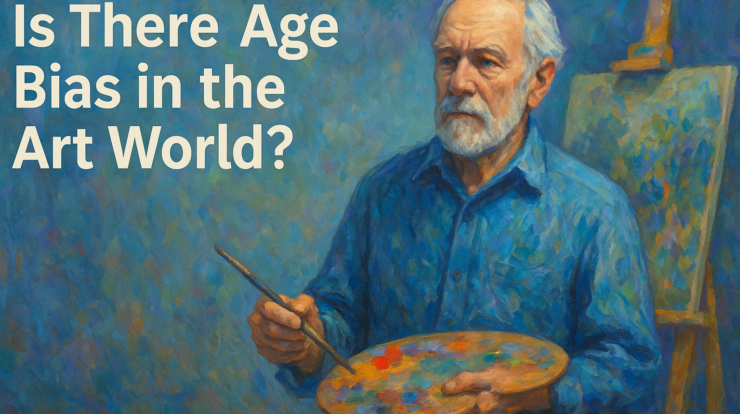

Let’s get this out of the way: yes, age bias exists in the art world. And no, it’s not the whole story.
It’s easy to wonder—especially if you didn’t start showing your work at 22 or weren’t “discovered” by some hotshot curator in your 30s—whether the art market has room for you. You might look at gallery rosters, press releases, or artist residencies and think, “Isn’t this a young person’s game?”
But the truth is far more nuanced—and far more encouraging.
If you’re wondering whether it’s “too late,” here’s the perspective that matters, and how to shape your art career in a way that sidesteps superficial assumptions and highlights what truly makes you marketable.
Yes, There’s Some Bias—But It’s Not a Wall
Age bias in the art world tends to be more subtle than overt. Gallery owners, jurors, or collectors may bring assumptions to the table, often unconsciously. Those assumptions might include:
-
Younger artists are more energetic, adaptable, or “emerging”
-
Older artists are hobbyists or late bloomers
-
Innovation = youth
These biases aren’t universal, and they’re rarely explicit. But they do exist.
What matters more is how you present yourself—and whether you hand people a narrative that reinforces their assumptions, or one that challenges them with credibility and clarity.
The Real Question: Are You Presenting as a Professional?
When gallery owners evaluate artists, they’re not just looking at your work. They’re assessing your entire package:
-
Is the portfolio cohesive and well-presented?
-
Does the artist seem organized, responsive, and reliable?
-
Are the biography and materials professional and polished?
-
Does the artist seem like someone they could confidently put in front of collectors?
This is where age becomes almost irrelevant—because professionalism outshines everything else.
A collector doesn’t care whether you’re 28 or 58 if they’re moved by your work, impressed by your presentation, and confident in your process. A gallery doesn’t want to babysit anyone, regardless of age. They want collaborators who are serious about their work and clear about what they offer.
Don’t Present Yourself as “New”—Position Yourself as Established
One of the most common missteps artists make—particularly those starting later in life—is leading with their inexperience. Bios that start with “After retiring from a career in…” or “I only recently started painting…” send the wrong message.
Instead, focus on what you bring to the table:
-
Your vision and the evolution of your body of work
-
Exhibitions, workshops, or milestones that validate your seriousness
-
The depth and perspective you’ve cultivated—whether you’ve been painting for five years or twenty
You don’t need to pretend you’ve been showing for decades. But you do want to project clarity, confidence, and intent. Present yourself as a working artist, not an aspiring one.
Use Your Experience as an Asset
Maturity can be a powerful differentiator in the art world. It often comes with:
-
Stronger discipline and time management
-
A deeper sense of purpose in your subject matter
-
More developed emotional and conceptual frameworks
-
Fewer distractions and a more focused work ethic
These qualities matter. And they often make older artists highly attractive to galleries—especially when your materials and presentation reflect the same level of professionalism as your art.
Age Doesn’t Limit Your Market—Presentation Does
It’s easy to assume that the market is skewed toward younger buyers looking for younger artists. But that’s not the only market.
Plenty of collectors are mid-career or retired themselves. Many are looking for work that resonates with their own lived experience, their sense of taste, and their values. That often aligns more naturally with the voice of an older artist.
The bottom line: your audience is out there. They just need to see your work—and your professionalism—in a way that resonates.
Final Thoughts
Age may affect first impressions, but it doesn’t determine outcomes. What matters most is how you show up:
-
With quality, consistent work
-
With a clear, professional presentation
-
With the confidence of someone who knows they belong in the room
Whether you’re 35, 55, or 75, there’s room for you in the art world—if you take yourself seriously and help others do the same.
You don’t need to be young to be relevant. You need to be prepared.