



We have all been there. You walk into the studio, look at the easel, and feel absolutely nothing. The Muse has packed her bags, and the creative well is completely dry.
We often label this “artist’s block.” But in my decades in the art business, I have noticed that it frequently isn’t a lack of ideas. Instead, it is a profound lack of interest, usually triggered by real-life exhaustion, personal hardship, or simple burnout.
When you are feeling depleted, the pressure to produce serious, gallery-ready art becomes paralyzing. The secret to curing this severe creative block is to radically lower your stakes and completely escape the pressure of art history.
1. The Paralyzing Weight of “Serious Art”
As working professionals, artists carry a heavy psychological burden into the studio. Every blank canvas comes with a set of exhausting expectations.
You begin to hear that internal monologue: “Is this piece going to fit my current portfolio? Will the gallery be able to sell it? Does it live up to the standard of my past work?”
When your mental energy is already drained by life events, this pressure is enough to shut down your creative process entirely. You start feeling like the entire weight of art history is descending upon your shoulders. To break the spell, you have to trick your brain into remembering that creating can just be fun.
2. The “Not Real Art” Loophole
Recently, an artist shared a brilliant strategy with me for circumventing this exact anxiety. After a devastating family loss and a bout of illness, she lost all interest in her primary medium.
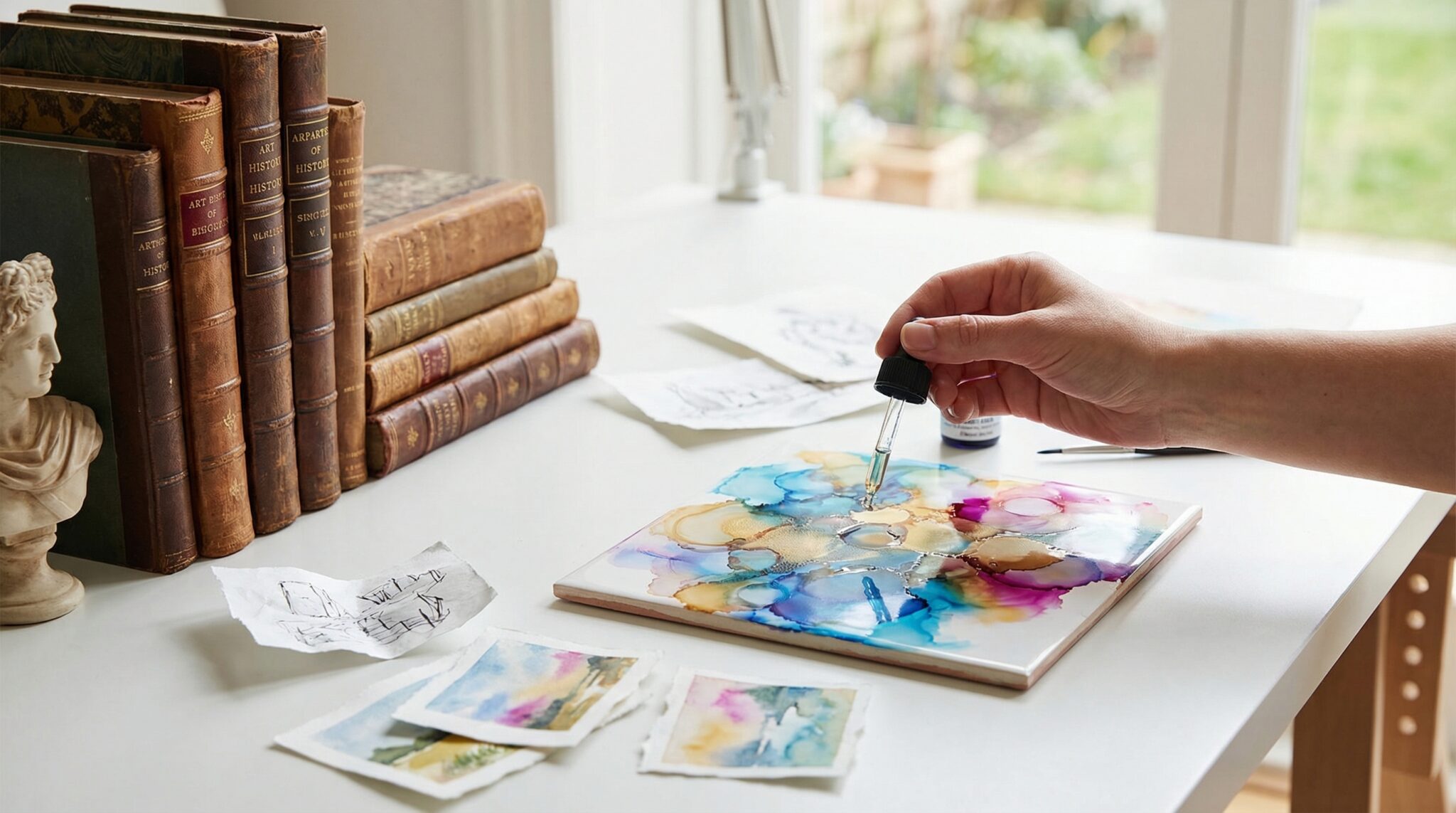
Her solution was to pick up alcohol inks—a medium she had never used before. In her mind, these weren’t “real paintings,” which meant she couldn’t possibly fail at them. Here is how you can apply this framework to your own dry spells:
-
Switch mediums entirely: Grab a material you have zero professional experience with. If you are a disciplined oil painter, buy cheap watercolors or alcohol inks.
-
Shrink the scale: Work in extreme miniatures, like a 2×2 inch scrap of paper. A massive canvas demands a masterpiece, but a tiny scrap demands nothing.
-
Embrace the trash can: Tell yourself before you start: “I am going to throw this in the garbage when I am done.” Removing the need to preserve the work eliminates the fear of ruining it.
3. Reclaiming Childlike Indifference
When we treat our art solely as a professional business, we forget the messy, joyful experimentation that brought us to the easel in the first place. You have to actively channel the mindset of a toddler with a paintbrush.
A two-year-old does not care a squat about what anyone thinks of their color choices. They aren’t worried about market trends, gallery representation, or their artistic legacy. They just grab the red paint because the red paint looks fun.
Get a cheap pad of paper and just have at it. Throw paint on the floor. Make a mess. Do not be precious with your materials or your time.
4. The Vacation Mandate
I see a recurring, dangerous habit among the artists I work with. For some reason, many of you feel that you can never take a true vacation.
You tell yourselves: “Creating artwork is my vacation. I am doing what I love, so I don’t need a break.” Let me be perfectly clear: making art is work. It is a demanding, mentally taxing business.
Sometimes you do not need a new studio technique; you just need to step away. Go to a museum and look at the Masters, take a hike, or simply reorganize your life. A change of scenery is often the ultimate reset button.
One Final Takeaway
If you force yourself to push through burnout by staring harder at a blank, expensive canvas, you will only deepen your resentment. By stepping away from your “serious” work and playing with unpredictable, throwaway mediums, you silence the inner critic and rediscover the joy of the process.
Once you create a few of these little, pressure-free experiments, you might be surprised. Put a clean mat in front of one of those miniature throwaways. Suddenly, it looks beautiful, you treat it with respect, and you are officially back in business.
Question for Readers
Have you ever experienced a severe dry spell that had nothing to do with a lack of ideas, but a sheer lack of energy? What unconventional or low-stakes tricks have you used to coax yourself back to the easel?