


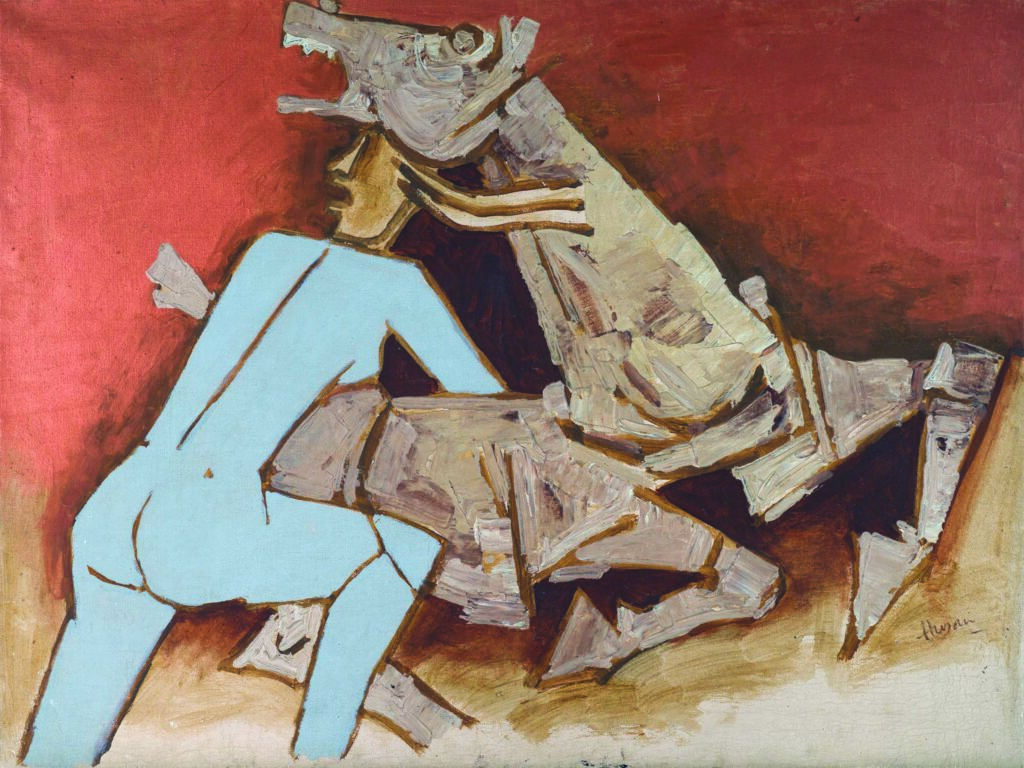
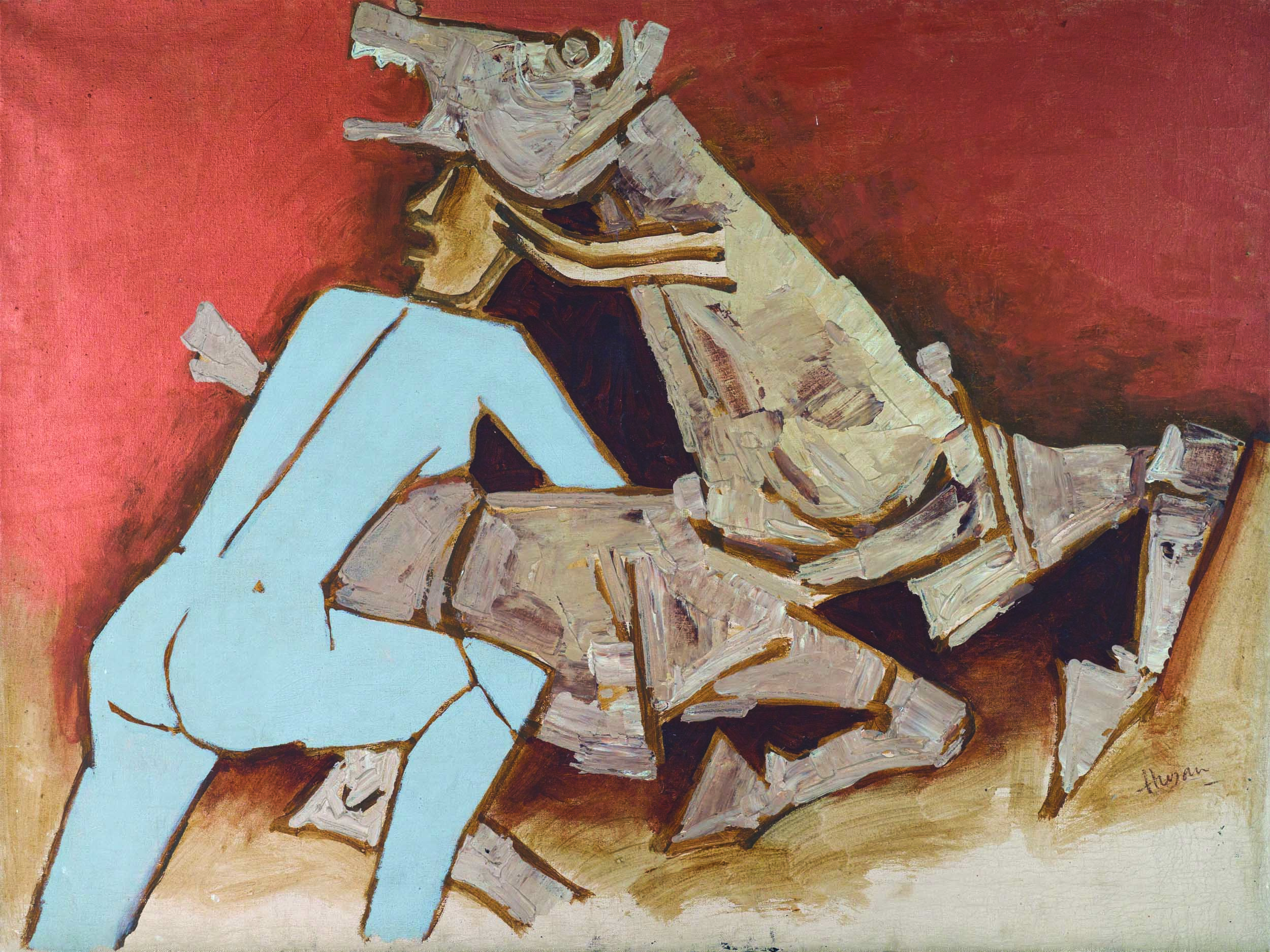

In 1947, M. F. Husain, at a crossroads in his life, left his stable job at Fantasy Furniture to pursue art full time, driven by a deep-seated belief in his artistic destiny. His decision was both bold and risky, given his growing family and uncertain financial future. The same year, he showcased his work at the Bombay Art Society exhibition, earning acclaim for Sunehra Sansar.
This period was pivotal not only for India’s independence but also for its modern art movement. Husain joined the Progressive Artists’ Group (PAG) in 1948, founded by F. N. Souza. This collective challenged artistic norms and profoundly influenced Husain’s style, integrating Indian classical influences with vibrant colors, shaping his iconic approach to modern art.
M.F. Husain’s career from the 1950s onwards marked a dynamic and transformative period in his artistic journey. Emerging from the shadows of obscurity, Husain navigated through an evolving landscape of influences, themes, and styles, solidifying his place as a preeminent figure in both Indian and global art circles.
This decade was marked by a profound shift in his subject matter and techniques. In the wake of India’s partition, Husain sought to articulate a sense of national identity that was both inclusive and introspective. He turned to the simplicity and resilience of rural and tribal life as a source of inspiration. This period saw him delving deeply into the lives of these unassuming people, reflecting a profound admiration for their culture and resilience.
Husain’s artistic horizons expanded significantly during this decade, also fueled by extensive travels. In 1952, he visited China, where he met the venerable Chinese artist Chi Pei She. This encounter offered Husain a rare glimpse into Chinese artistic traditions, enriching his understanding of diverse artistic expressions. The following year, his travels took him to Europe, where he immersed himself in the works of masters like Emil Nolde, Paul Klee, Cimabue, Giotto, Masaccio, and Paolo Uccello.