


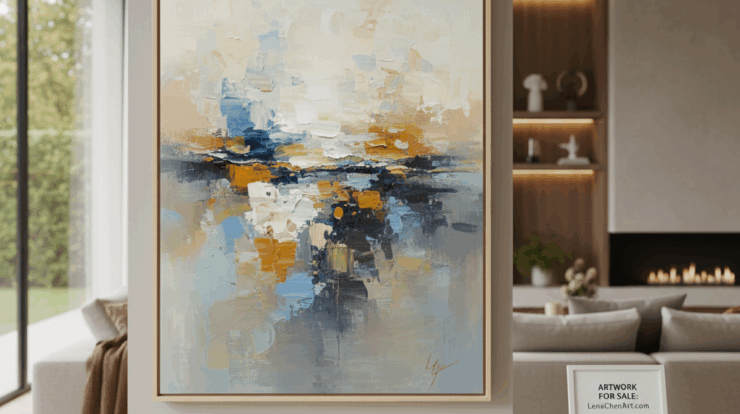

As an artist, your studio can sometimes feel like a crowded waiting room. Canvases lean against the walls, finished and ready for the world, yet they remain unseen. It’s only natural to look for every possible “window” to display your work, leading many to consider alternative venues: high-end restaurants, boutique hotels, or luxury real estate staging.
On the surface, the proposition is enticing. You get your work out of the dark and into a beautifully designed space where affluent people spend their time. But before you load up the van, it’s important to evaluate these opportunities through a strategic lens rather than an emotional one.
The Hidden Value: High-End Marketing Assets
The most immediate benefit of staging your work in a professional setting isn’t actually a sale—it’s the photography.
In an era where your online presence is often a collector’s first point of contact, a photo of your painting hanging over a designer sofa in a $2 million home is worth ten times more than a sterile “headshot” of the painting against a white wall. These “in-situ” images provide scale, context, and a sense of lifestyle that helps a potential buyer visualize the work in their own home. Even if the home sells and your art returns to the studio, you’ve gained permanent marketing assets for your website and social media.
The Sales Reality Check
It is important to be realistic: alternative venues are rarely high-performance sales environments. When people are at a restaurant, they are focused on the food and conversation. When they are touring a staged home, they are focused on the architecture and the floor plan.
In these settings, art often becomes “part of the scenery.” Unlike a gallery, where the environment is specifically designed to facilitate a transaction and focus the mind on the art, alternative venues are passive. Without a dedicated “closer” on-site to answer questions about the artist’s process or price, the path from “I like that” to “I’ll buy that” is long and full of friction.
The “Hassle Factor” and Risk
Every time a piece of art leaves your studio, it is at risk. Before committing to an alternative venue, consider the logistical costs:
-
Insurance: Most standard studio policies do not cover work once it is sitting in a third-party commercial space. You may need an additional rider.
-
Transportation and Installation: High-quality staging requires professional hanging. A crooked painting or a poorly lit corner can actually damage your brand’s perception.
-
Opportunity Cost: If your best piece is sitting in a restaurant for six months, it isn’t available for a gallery show or a quick ship to an online buyer.
Strategic Execution: Tips for Success
If you decide that the demographic exposure and the photography benefits outweigh the risks, follow these professional guidelines:
-
Demand Professional Signage: Don’t rely on a stack of business cards on a distant counter. Ensure there is a clean, professional plaque next to the work with your name, the title, and a QR code leading directly to the piece on your website.
-
Focus on the Relationship: Staging is often most successful when it’s about networking. Building a relationship with a high-end interior designer or a luxury real estate agent can lead to commissioned work long after the initial staging event is over.
-
Set a Deadline: Never leave work in an alternative venue indefinitely. Set a 60 or 90-day limit. If it hasn’t generated a lead by then, it’s time to rotate the inventory or bring it home.
Have You “Staged” Your Way to a Sale?
I’ve seen artists find great success with alternative venues, and others who felt it was a drain on their time. Have you ever placed your work in a non-gallery setting? Did it lead to a sale, or did it simply provide you with great portfolio photos? I’d love to hear about your experiences.