

In episode 281 of The Art Biz, Meg Casebolt comes back with an update on SEO (search engine optimization). A lot has changed since Meg was on just a year and a half ago in early 2025.
If you want people to find your art online, you need to know about this rapidly changing landscape.
You’ll hear this called SEO, AEO, or GEO. Meg calls it AI discoverability.
What has changed in online search
Five years ago, you typed a phrase into Google and it matched pages that used that exact phrase. Now an AI summary sits at the top of about 70-80% of Google results pages. It pulls a sentence or two from several sources and answers the question before anyone clicks.
ChatGPT, Perplexity, and Gemini answer questions too, sometimes without any links.
That means people think they have their answer before they ever visit your site. The decision is often being made on the search page, not on your website.
There’s good news for you. People searching for art want to see art, and these tools can respond with images. Someone who describes the calm feeling they want above their taupe couch may find your work, not just a Pottery Barn listing.
People can also begin their search with a photo. Take a picture of a piece in a hotel lobby, upload it, and ask who made it or for something similar but smaller. Google Search Console now has a “multimodal” filter that shows when your pages appeared for searches like that. It doesn’t show you the photo the person uploaded. It shows which of your pages matched, so you can look for what those works have in common.
Listen
How to make sure AI tools find your name and art
Meg’s word for this is legibility: how easily these tools can understand who you are and what you make.
She sees three levels: (1) you, the artist, (2) your art, and (3) the individual images on your site. Here’s how those look.
How to make your name legible to AI tools
In the episode, Meg uses Jessica Falcone’s website as an example. For you, she suggests you start this process by searching “your name + artist” in Google, then asking ChatGPT, Perplexity, or Gemini who you are. The search results will show you where the answer comes from.
If it’s not your website — the one piece of virtual real estate you own and control — you have work to do.
You can’t argue with the results, but you can fix the sources by using the same or very similar language on your website (most important), your Instagram or other social bio, and any directory listings. When these sources agree, the tool doesn’t have to guess.
Continue your research by asking the AI tool: “In what types of searches would you recommend [your name]?” Use the answer to refine further.
Your first step —> Meg’s easy win is a updating and adding a short bio in your website footer with your name, location, the type of art you make, and when you started. One to three sentences that repeat on every page without any more work from you.
Maybe start with this format: <Your name> is a <location> artist who <clear description of your art>.
You can scroll to the gray box at the bottom of this page to see how I have done this for my own business.
Your art: how to describe your body of work
Portfolio and series pages need words as well as pictures.
Fancy yourself a poet? You can use pretty or esoteric words in your series title, but that doesn’t help people find you. Make sure you have descriptive language about the artwork on the main portfolio pages.
If you want extra credit, start adding it to the individual artworks’ pages themselves.
There’s never been a better time to start journaling to collect words about your art. Review my suggestions for your artist statement and consider the process for every artwork you have on your site. You read that right.
Skip the cutesy taglines and floral lingo nobody would search for.
A tool can’t feel grief or joy, but it can match your story to someone looking for a painting that honors their mother, a sculpture to go in the garden, or a ceramic platter for a special gift. Give it something to match.
Individual images: how to label each image
Every image needs a trail of names and descriptions so these AI search tools can connect it to you. Build that trail with three things:
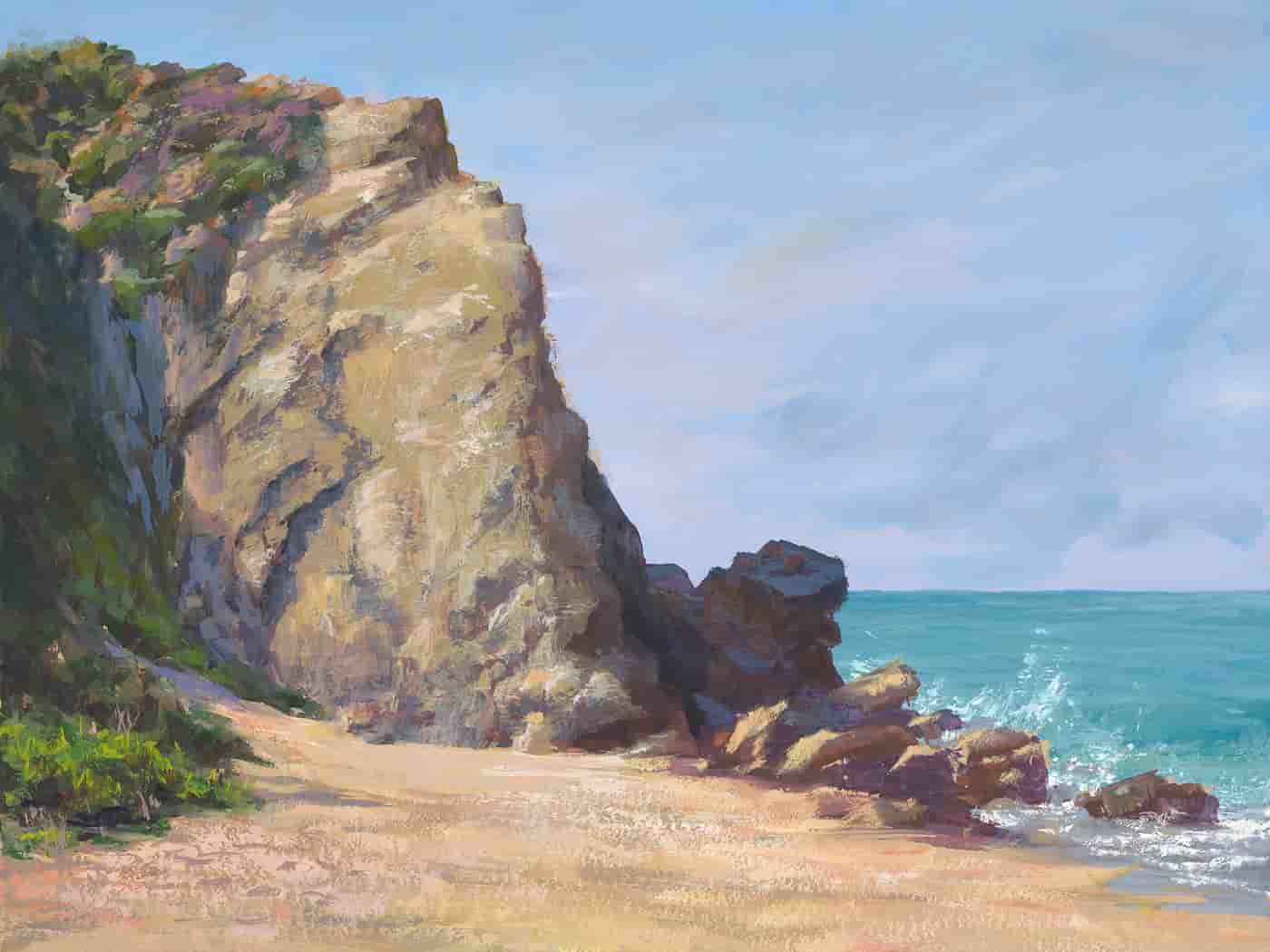
- File name clarity: “Rocky-Malibu-Beach.jpg” beats IMG_4321.jpg every time.
- Alt text: This is not the same as the caption. Write it as if you’re explaining the image to someone using a screen reader. “Black-and-white handmade ceramic dish” is plenty.
- Caption: This is your complete credit line, as you would see from a gallery or museum. Here’s how you write that.
Do keywords still matter?
We’re well past the point of loading up your website pages with keywords and key phrases. But you still have to be clear about what you do.
If you insist that your artwork speaks for itself, expect your search results to reflect that aversion to words. The minimal text you insist on makes it harder to be found.
Aim for clarity, consistency, and repetition without forcing keywords throughout your text.
Meg Casebolt Quotes
“The decision is happening on the search page.”
“You want AI to know who you are and to be able to discover and recommend you.”
“I want you to think about how can I send a consistent understanding and explanation of who I am, what I create, and how I do it?”
“If you’re putting the same information in three different places, it’s way more likely to say what you want it to say because it doesn’t have to guess.”
“You can still have those moments of poetry, but you also have to have the moments of description and inspiration and why it matters.”
“Go ahead, send that person to Pottery Barn. We don’t want them anyway.”
And a bonus one from me:
“There is a tendency for artists to come up with cutesy taglines and clever art words that nobody would search for, that doesn’t mean anything.” – Alyson

About Meg Casebolt
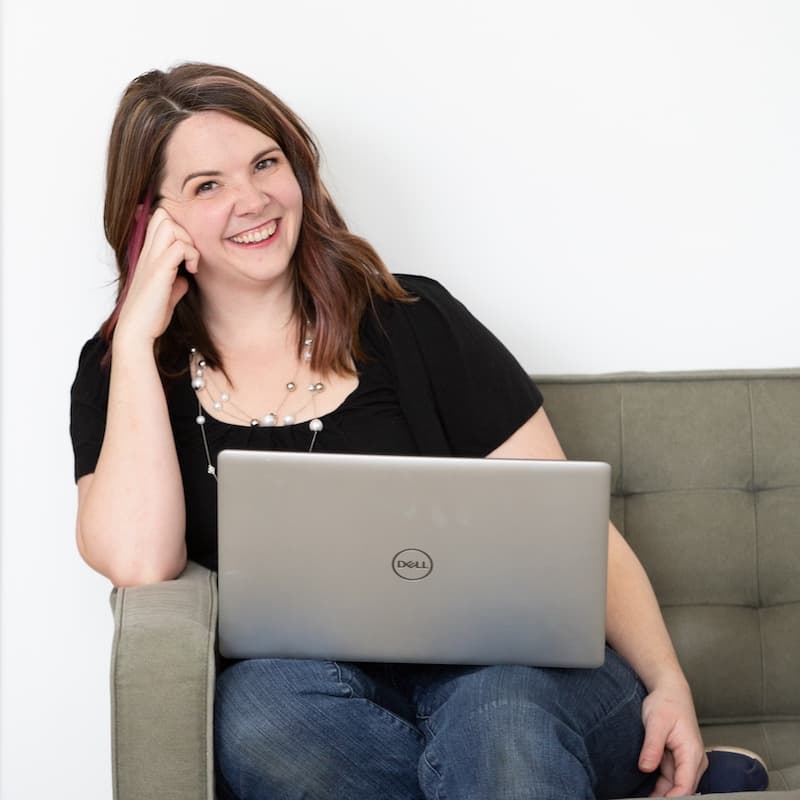
Meg Casebolt helps experienced founders, consultants, and creators become findable in AI-powered search—not through keyword tactics, but through strategic authority positioning.
As founder of Love At First Search, she works with experts who don’t need more SEO advice but do need a new way to be understood by modern search systems. Her approach focuses on helping people become quotable and recommendable: teaching them to claim specific expertise territory and build the signals AI uses to evaluate credibility.
Meg co-hosts the Aggressively Human podcast and has developed frameworks including BEACON and Human-First SEO methodology to help service-based businesses transition from traditional optimization to sustainable authority building.
She lives in Rochester, NY with her husband, two boys, and an 80-pound pit bull, and maintains strong opinions about Broadway musicals, romance novels, and the structural importance of s’mores.
The post Want your art to be found online? New SEO rules with Meg Casebolt (281) appeared first on Art Biz Success.